Institute and facilities
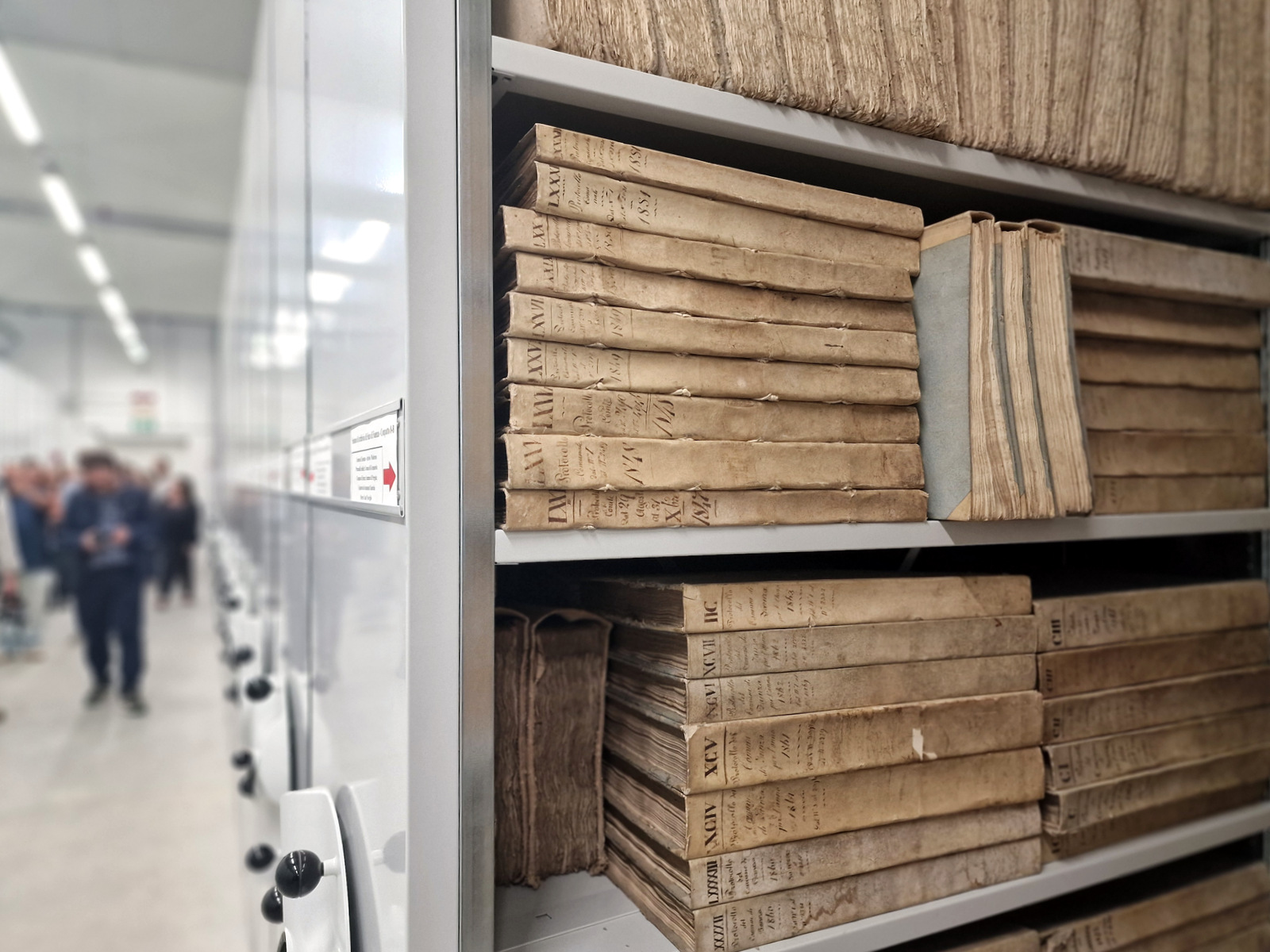
The building covers approximately 1,000 sq m and features over 7 km of shelving; 5.6 km are already in use, housing 2.7 km for the State Archive and 2.9 km for the Archival Center, with documentation spanning over a millennium of history. The facility was designed not only to safely preserve the documentary heritage but also to facilitate consultation by scholars, historians, professionals, and citizens, and to promote archival education with schools.
The agreement with the construction company included not only the building itself but also the creation and free transfer to the Municipality of infrastructure such as the new roundabout along via Silvestro, tree-lined roads, and sewer and public lighting systems. A distinctive feature of the Archival Center is the mural titled ‘Astronave Archivio’, a 400 sq m artwork created using mixed techniques: spray paint and ceramics.
Designed by Monica Cuoghi and Claudio Corsello, in collaboration with the artist ‘Dado’ (Alessandro Ferri), the mural transforms the word “Archivio” into an abstract and dynamic image. The artistic project was curated by Viola Emaldi, who coordinated the artists and craftsmen.


The documentary heritage
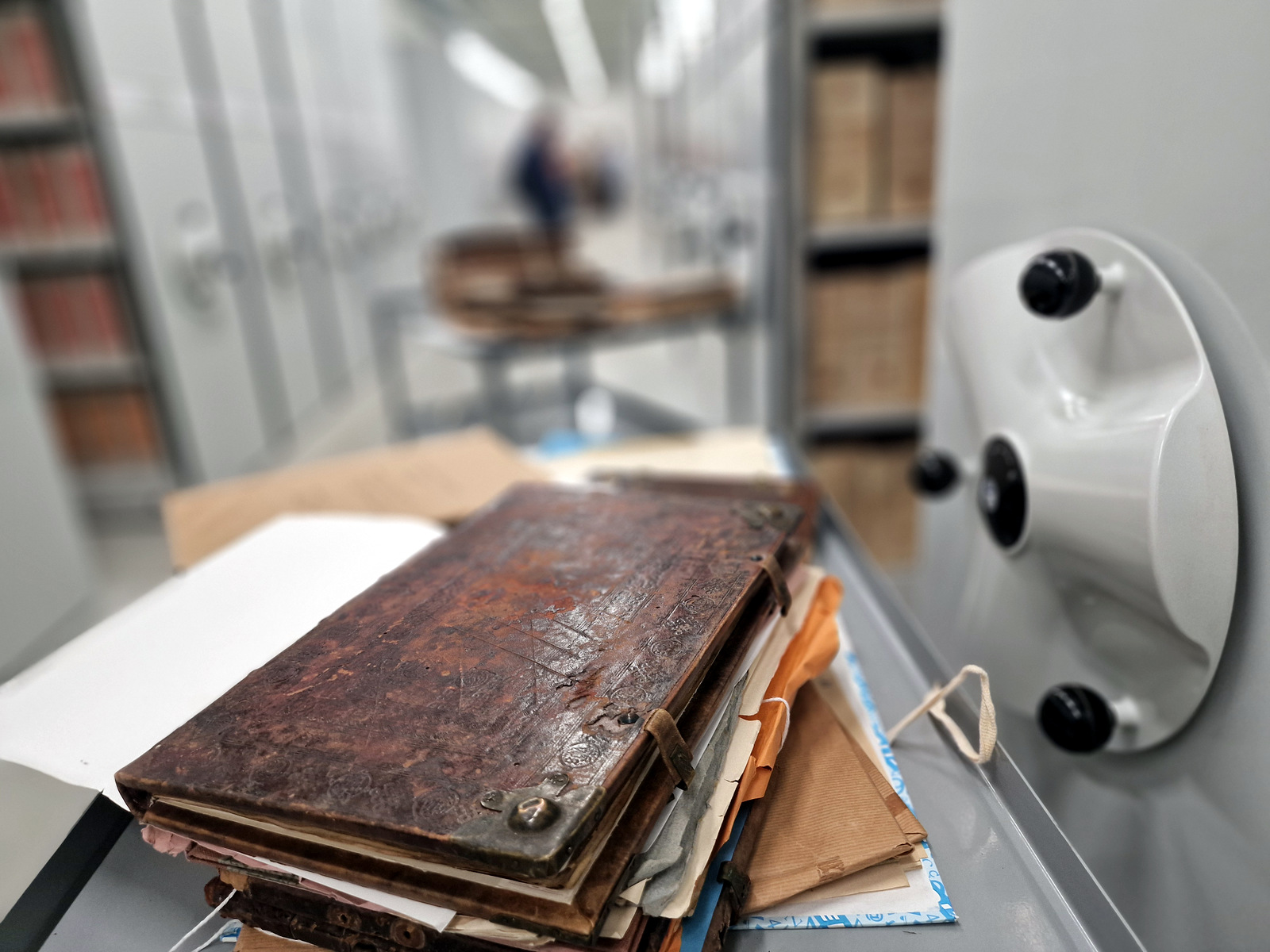
The new institute preserves millions of documents that recount the history of the territory, from the Early Middle Ages to today. The oldest document is a parchment dated August 2, 979, recording a property sale by the bishop of Arezzo; the most recent are the resolutions of the Council of the Romagna Faentina Union from 2014.
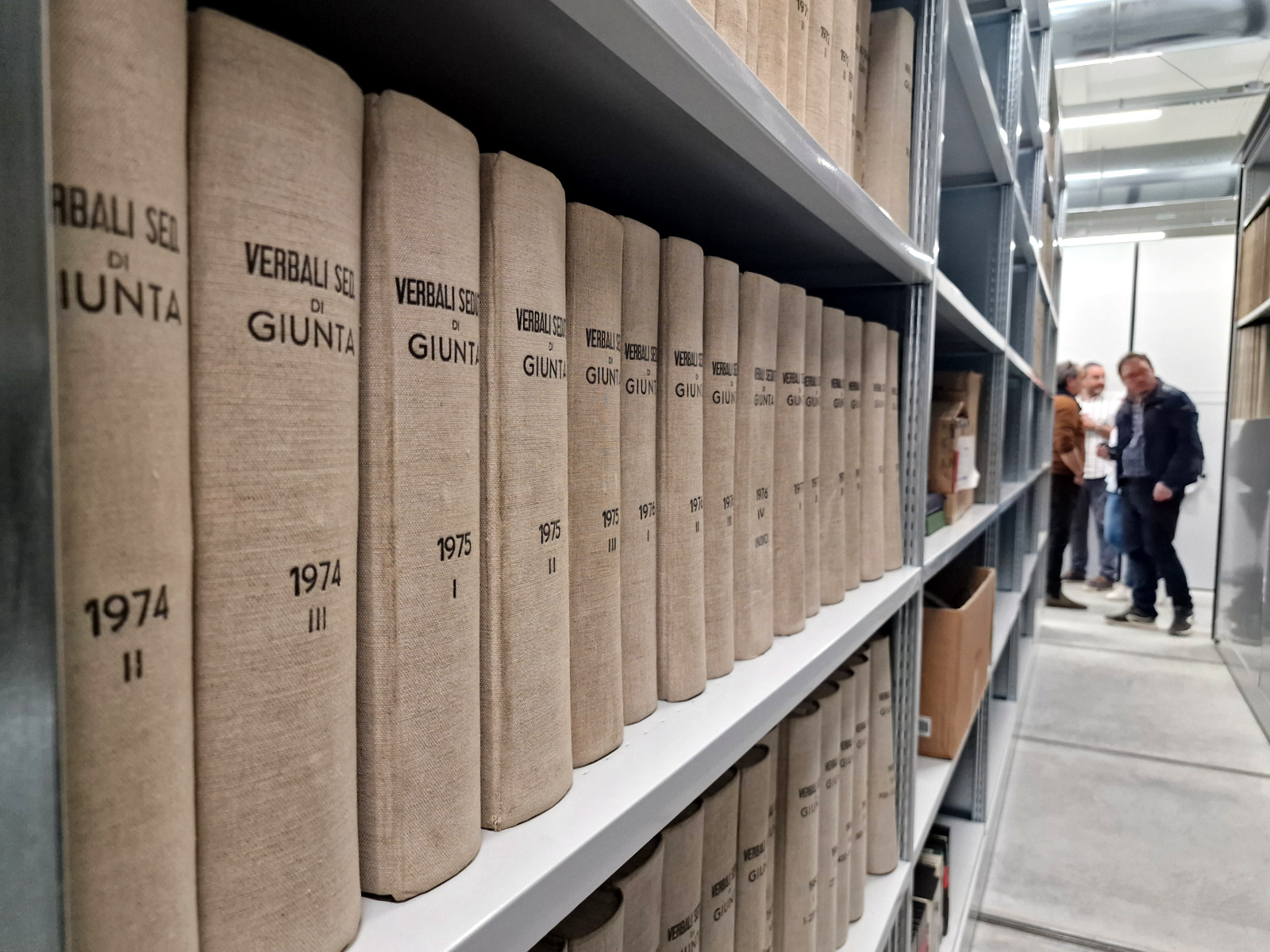
The Archival Center primarily includes the municipal archive from 1957 onwards (the historical archive prior to 1957 is held at the State Archive section): general correspondence of the municipality and building records. Council and executive committee resolutions are available from the post-war period. The municipal archive also incorporates several other collections from the Faenza area: Canal Naviglio Zanelli (1776-1996), Asilo cittadino (1849-1982), Congregazione di carità (1850-1934), Ente ospizi marini montani (1869-2001), Ente Comunale di Assistenza (1922-1980), Settimana Faentina (1931-2001), Faentino lontano (1960-2010), and Azienda Multiservizi Faentina (1965-2000).
Additional holdings include the archive of the former Mountain Community of the Faenza Apennines (1973-2009) and some archival collections from the municipalities of the Union that were saved from the May 2023 flood: 90 linear meters from the historical archive of Castel Bolognese (1535-1978), secured before the event; 20 linear meters from Solarolo (1902-2000); and 6 meters from the Opere Pie Raggruppate of Brisighella (1578-1993), rescued immediately after the flood. Centralized and renewed management of the documentation has already shown significant benefits. For example, the early transfer of around 2,400 linear meters of documents has sped up consultation and ensured the preservation of building records, previously scattered across multiple locations, simplifying access and reducing time and costs for the municipality.
The State Archive section preserves over 2,400 parchments, nearly 1,200 maps, and about 33,000 volumes, registers, and folders. Among the main holdings is the historical municipal archive of Faenza, starting from the Antica Magistratura, spanning from the 10th century to 1956. This collection documents the Renaissance period, the Napoleonic era, the Restoration, unified Italy, both world wars, the Fascist regime, and the post-war period. Of particular interest is the cartographic heritage, largely focused on hydrography and transportation routes, but also including plans of churches, monasteries, theaters, and other notable city buildings. Modern judicial collections (Podestà and Governors) related to Faenza, Modigliana, and Brisighella are also significant. The oldest preserved materials mostly come from the Religious Corporations of Faenza, which include archives of ecclesiastical corporations suppressed under the Napoleonic regime and lay confraternities. For understanding local land ownership, the Ancient Cadastres (from 16th-century Estimi Antichi) and notarial archives of Faenza, Brisighella, Castel Bolognese, Riolo, Casola Valsenio, Solarolo, and Bagnara di Romagna are particularly important. Among private archives, notable collections include the noble families Mazzolani, Laderchi, and Spada, as well as the recent donation of the Zanelli-Quarantini archive. The documentary heritage has long been widely consulted by historians and researchers. Before the transfer of the Faenza State Archive Section to via Zucchini (November 2022), nearly 750 users accessed the archive in one year alone, with over 5,200 items consulted and around 250 research requests, both historical and professional.

Organization, accessibility, and research tools
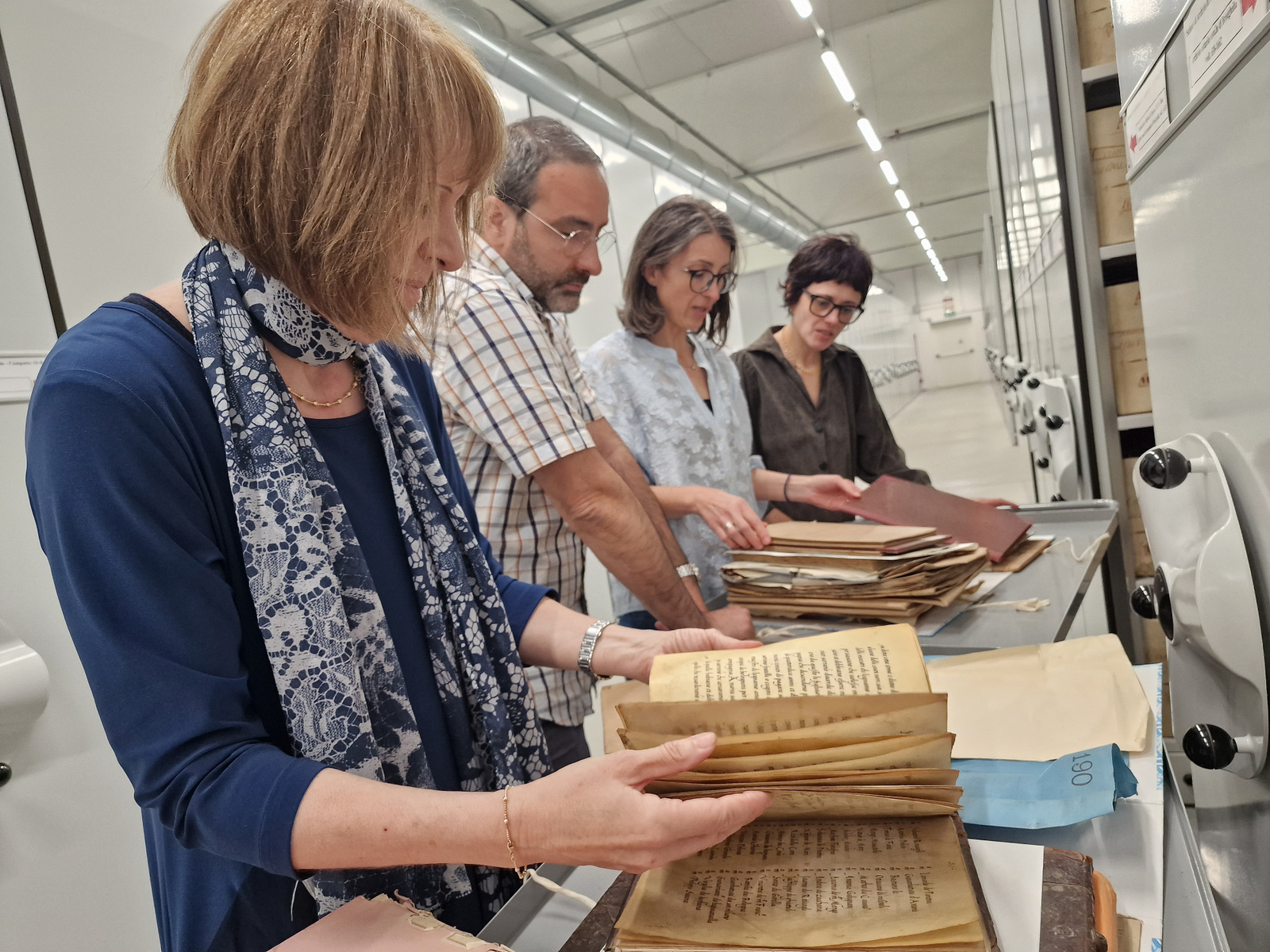
Starting Friday, May 23, 2025, the Faenza Archival Center and the State Archive Section will regularly open to citizens and researchers. Opening hours are designed to allow consultations both in the morning and afternoon, supporting cross-searching across both collections. Both institutions provide inventories and other tools to facilitate document research. The Archives and Protocol Service of the Union has already cataloged all files from the main series of the municipal historical archive for the period 1957–1985 to further simplify historical and administrative research.


Access information
On Tuesdays, both institutions are open in the morning and afternoon to facilitate cross-searching of their respective documentary holdings, both historical and administrative.
For the Faenza Archival Center, you can write to archiviofaenza@romagnafaentina.it or call, during opening hours, 0546 691276 and 0546 691277.
For the State Archive Section, you can write to as-ra.faenza@cultura.gov.it or call, Monday to Friday, 0544 213674.