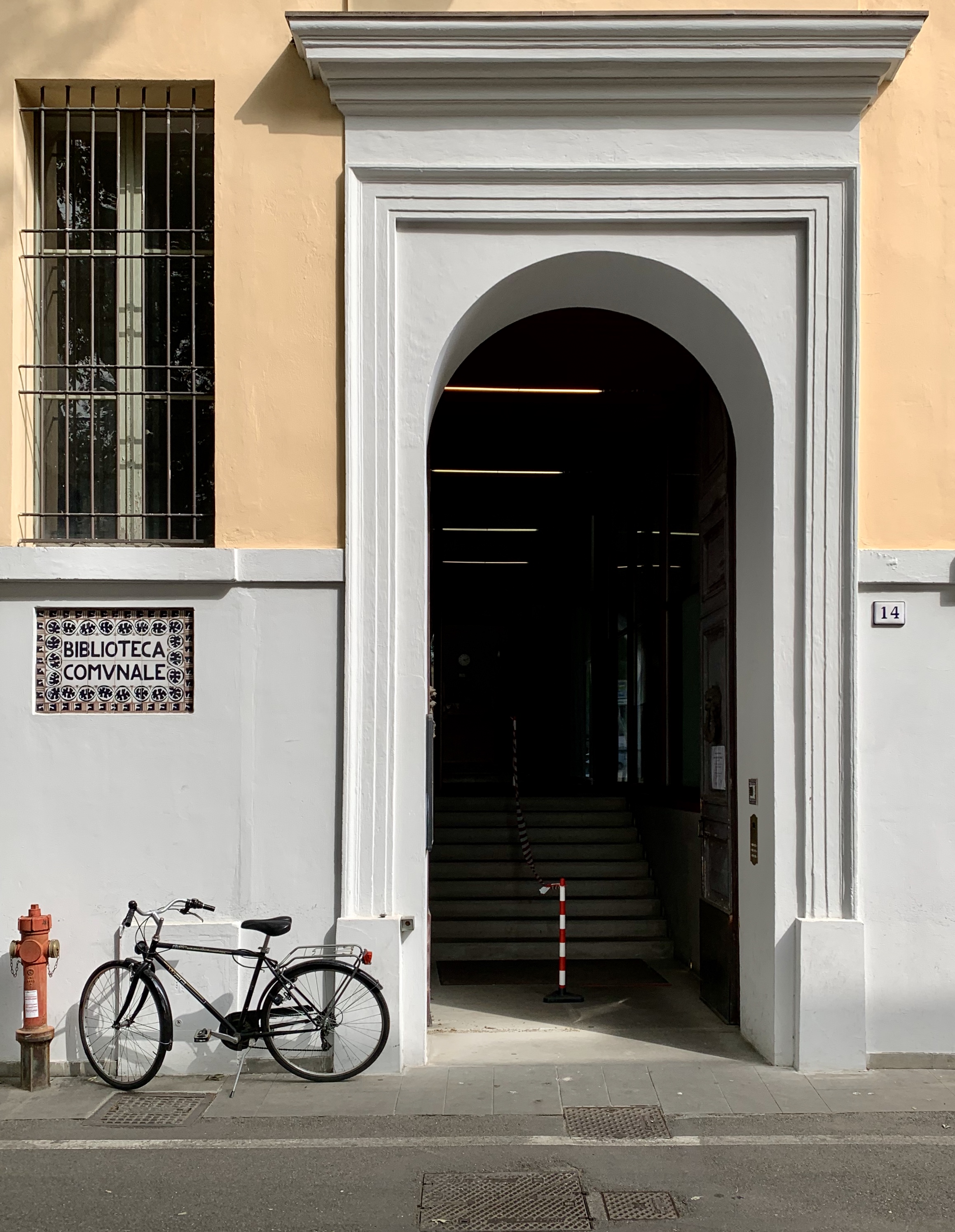
Since 1825, the Manfrediana Library has been housed in the monumental complex of the Church and former Convent of the Servants of Mary, which is organized around two cloisters dating back to the 14th century.
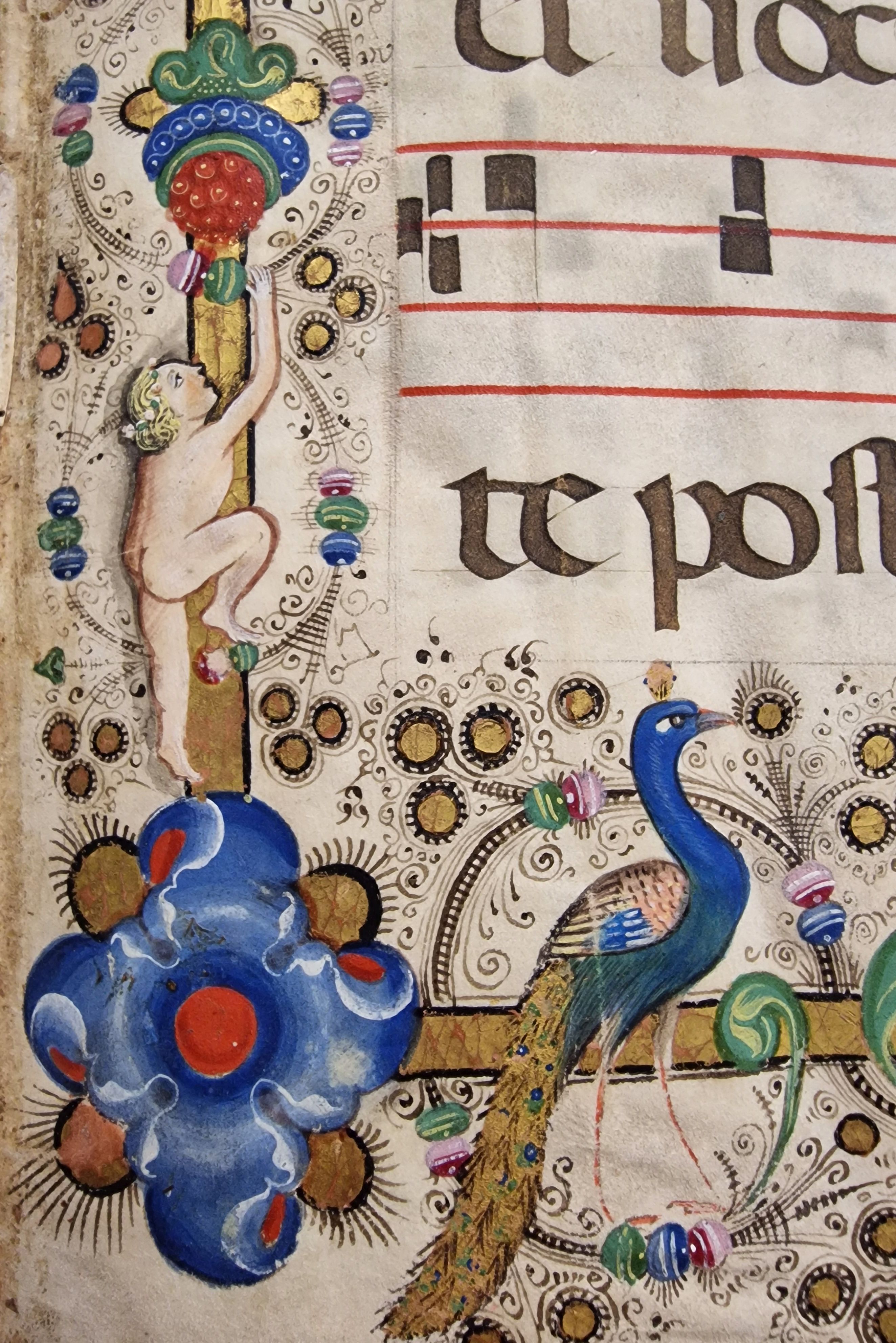
The Library’s collections include medieval illuminated antiphonaries, rare books, engravings, drawings, and watercolors.
The Library also preserves numerous works of art and hosts exhibitions and cultural events.
The origins of the Library of Faenza date back to the Napoleonic suppressions of religious houses and the subsequent confiscations starting from 1797. Only in 1825, as commemorated by the plaque on the main staircase, was the library moved to its current location, following the return of the convent complex to the Jesuits, who came back to Faenza in the early decades of the 19th century.
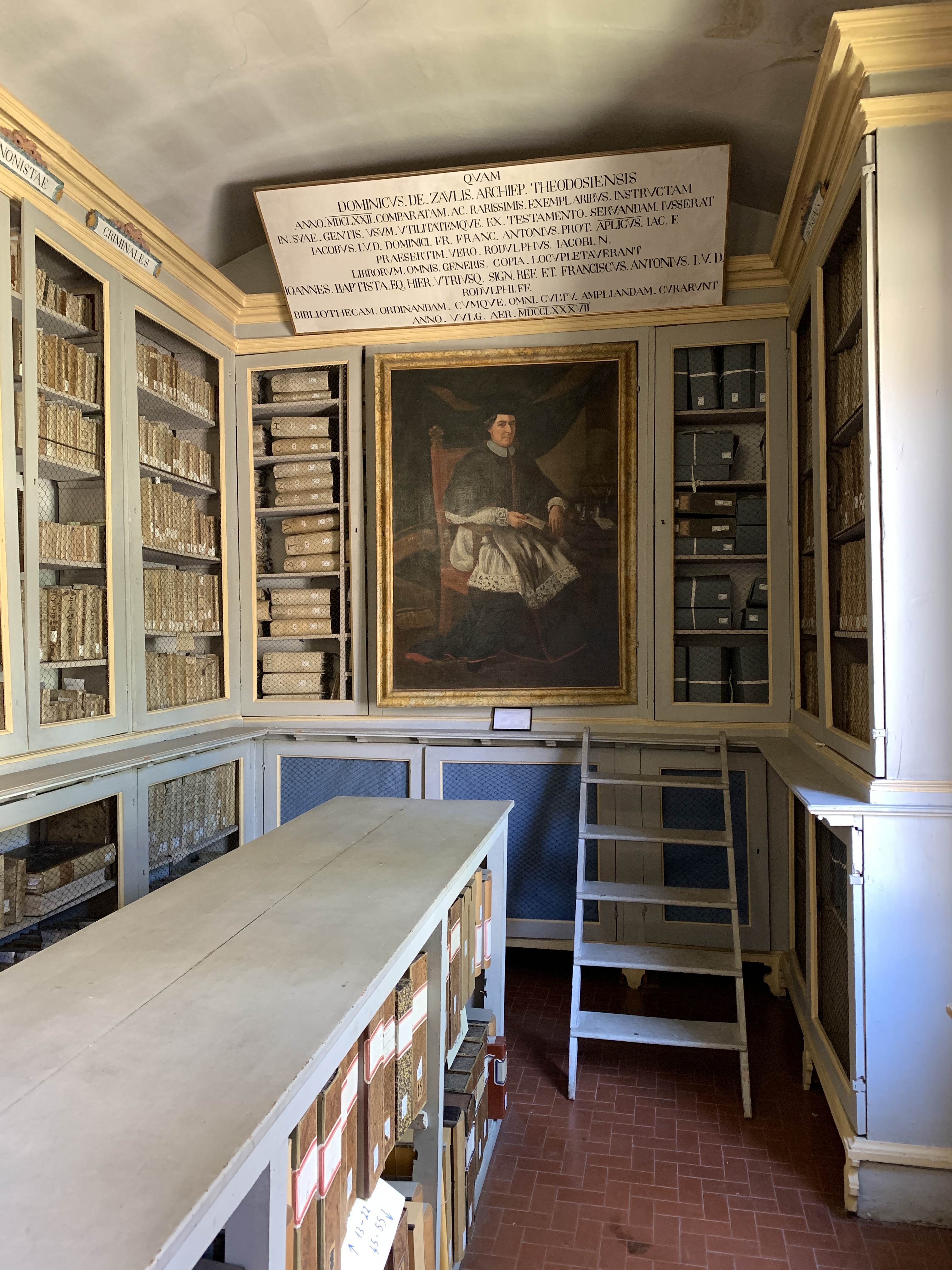
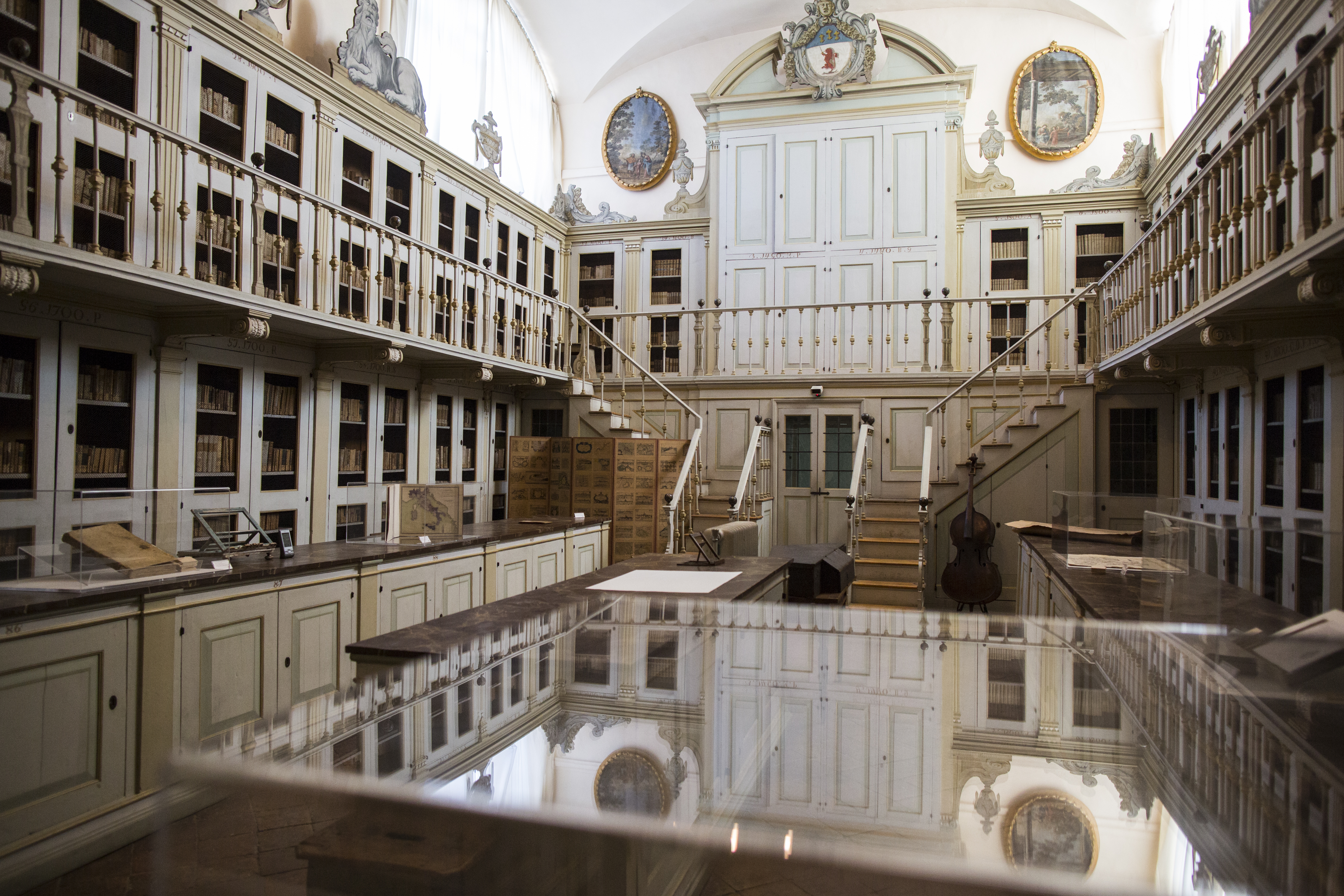
In 1923, under the direction of Piero Zama, who led the institute from 1920 to 1956, the Notarial Archive and the Municipal Historical Archive were transferred to the Library. They were placed in the ancient shelving units built in 1784 by Francesco Sangiorgi based on designs by Luigi Gallignani, carefully restored and moved here. These shelves give the name to the 18th-Century Room, visitable by appointment, which today houses the Library’s foundational book collections.
The musical collections include the Codex Faenza, one of the richest and oldest collections of instrumental music, compiled between the 14th and 15th centuries.
The Cabinet of Drawings and Prints, established in 1974, gathers all the iconographic material received by the Library over the years.
The Aula Magna houses the celestial globe by the geographer and cartographer Vincenzo Coronelli, accompanied by the terrestrial globe, reconstructed after the 1944 bombings that damaged the Library.
The contemporary collections and the rich calendar of events—meetings, exhibitions, and presentations—make the Manfrediana a lively cultural hub.