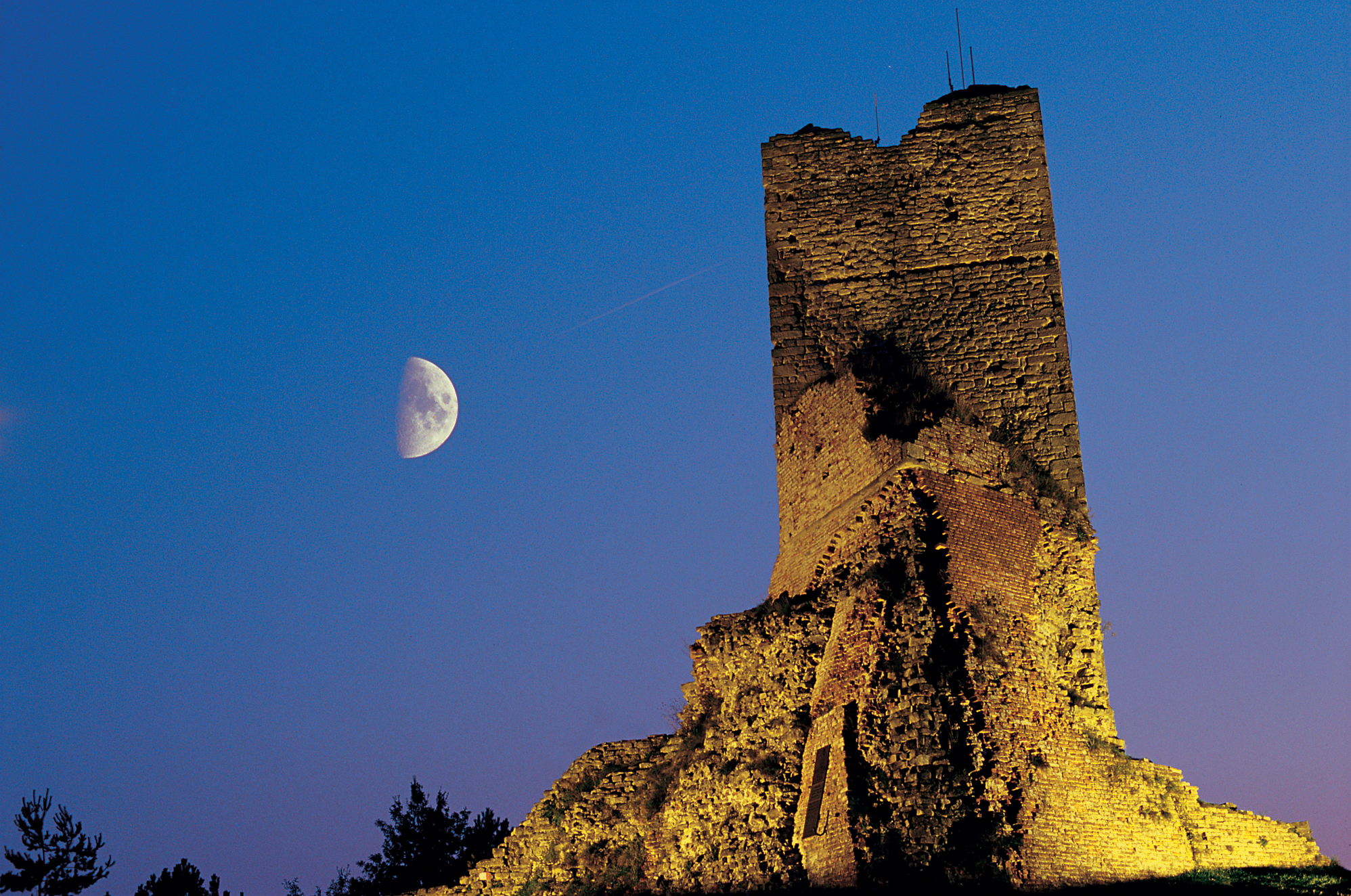
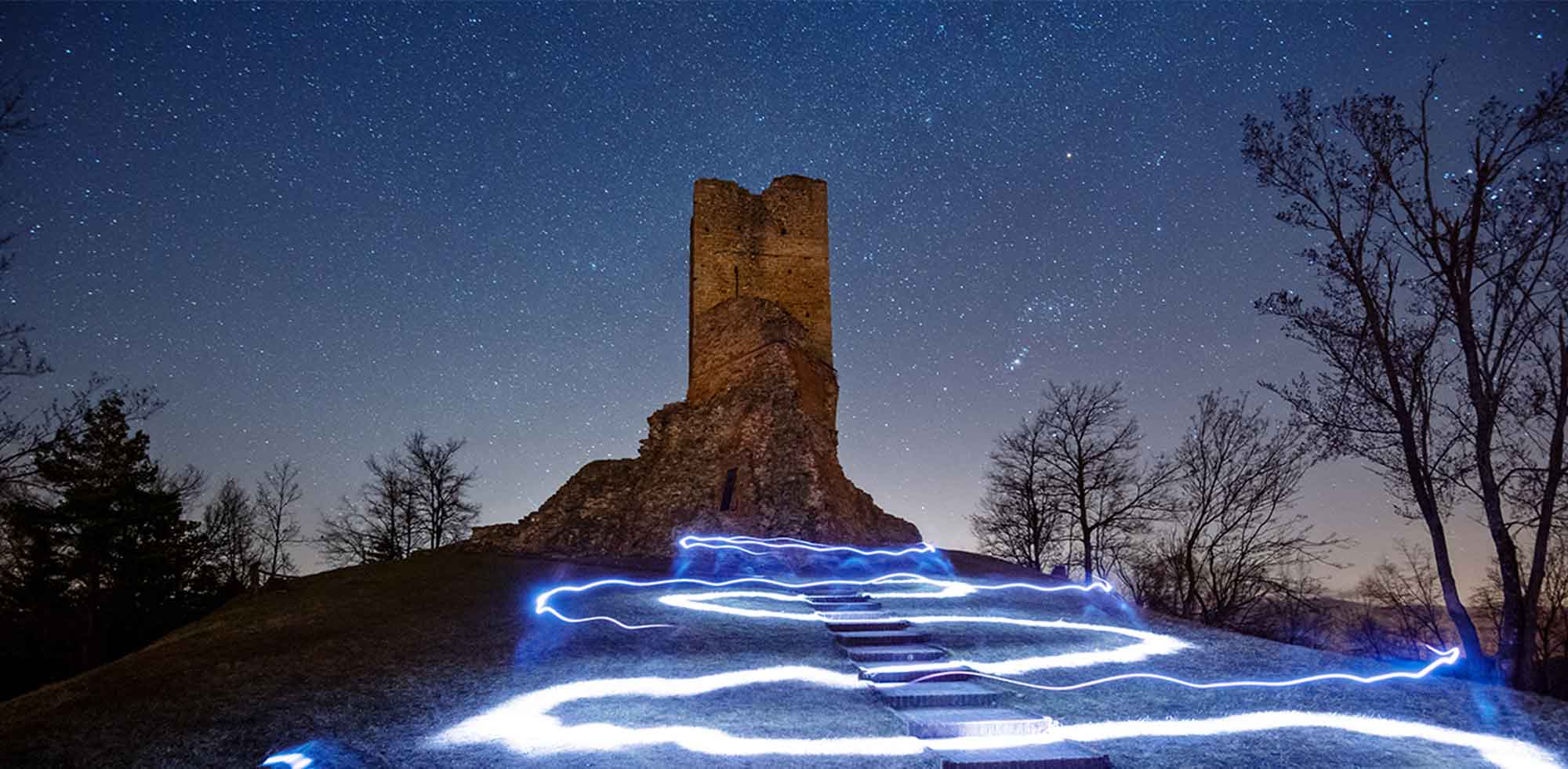
Monte Battaglia is an ancient site, frequented since prehistoric times, but only from the 12th century do we have records of a fortification, strategically positioned to control the territory.
The fortress that has survived to the present day was built after the destruction of 1390, ordered by the municipality of Bologna, which took the area from Imola’s control, subjugating the local lords. The castle consisted of a square tower, an enclosing wall around the plateau, and a sandstone cistern, later expanded in the second half of the 15th century with new structures, including service rooms in the courtyard and a masonry and stone spur for defense against firearms, similar to that of the Torre di Oriolo dei Fichi in Faenza. The 15th-century renovations were part of the territorial redevelopment project of Carlo II Manfredi, Count of Valsenio and owner of the castles of Monte Battaglia and the Rocca di Riolo Terme.

For centuries, Monte Battaglia was the site of numerous battles for control over the territory between Imola, Faenza, and the Tuscan-Romagna Apennine ridge, which is how it earned its name, already documented in the Middle Ages.
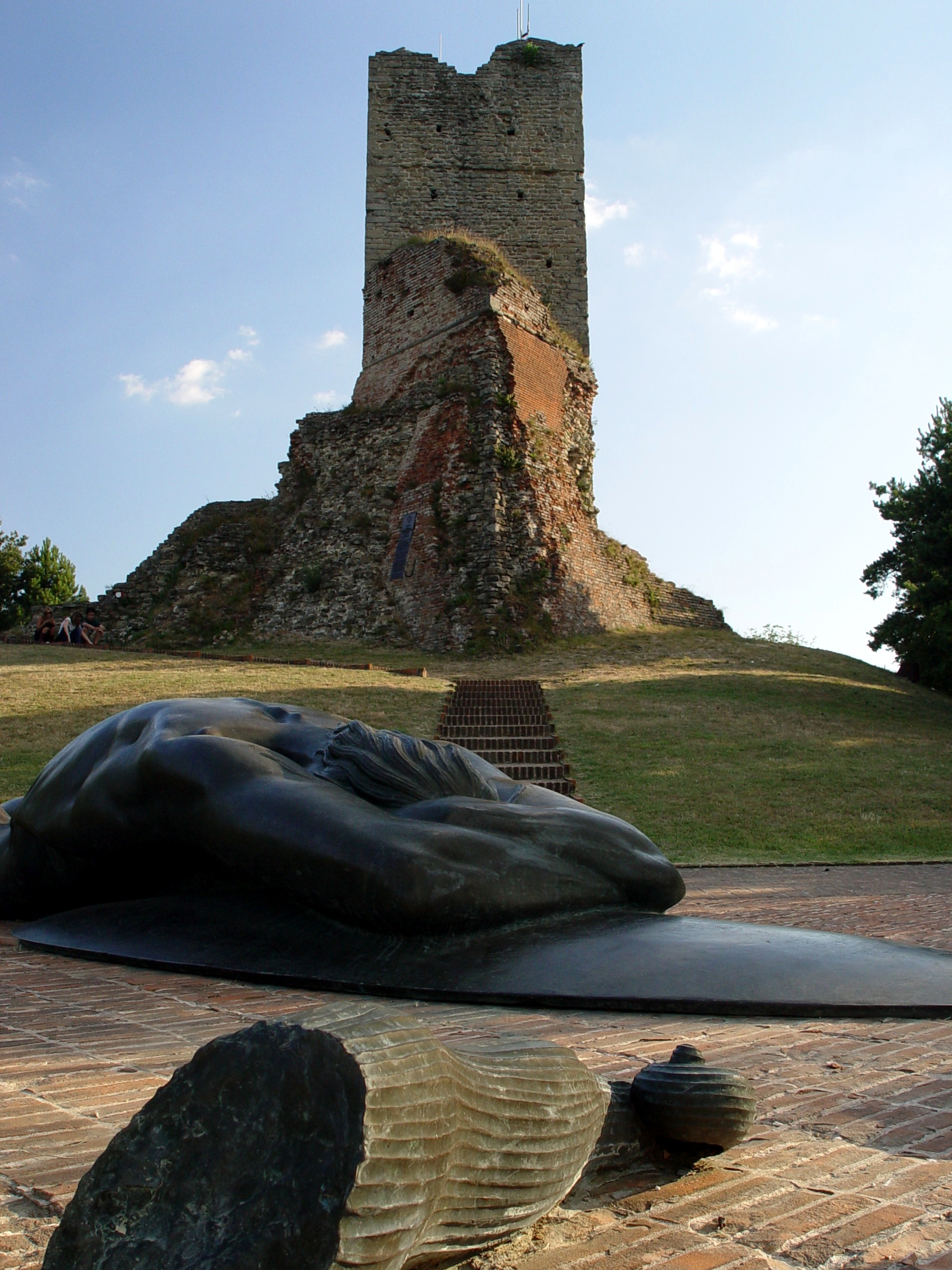
During World War II, after centuries of decline, the hill regained its role as a military stronghold, considered by strategists as a gateway to the Po Valley. Between September 26 and October 11, 1944, one of the bloodiest battles of the Italian campaign took place here. Since then, Monte Battaglia has become a symbol of the Resistance for the Romagna population and a place of remembrance for fallen partisans and allied soldiers. Opposite the tower stands a bronze monument commemorating this tragic episode, created by the Faenza sculptor Aldo Rontini.


Between 1985 and 1988, the ruins of the fortress underwent extensive restoration and archaeological excavations that brought to light the layout of the walls, consolidated along with the tower, restoring the site’s original form as a fortress. Monte Battaglia has been a national monument since 1931.
The fortress is about 6 km from the center of Casola Valsenio and can be reached via a 50-minute walk along the CAI 701 trail.