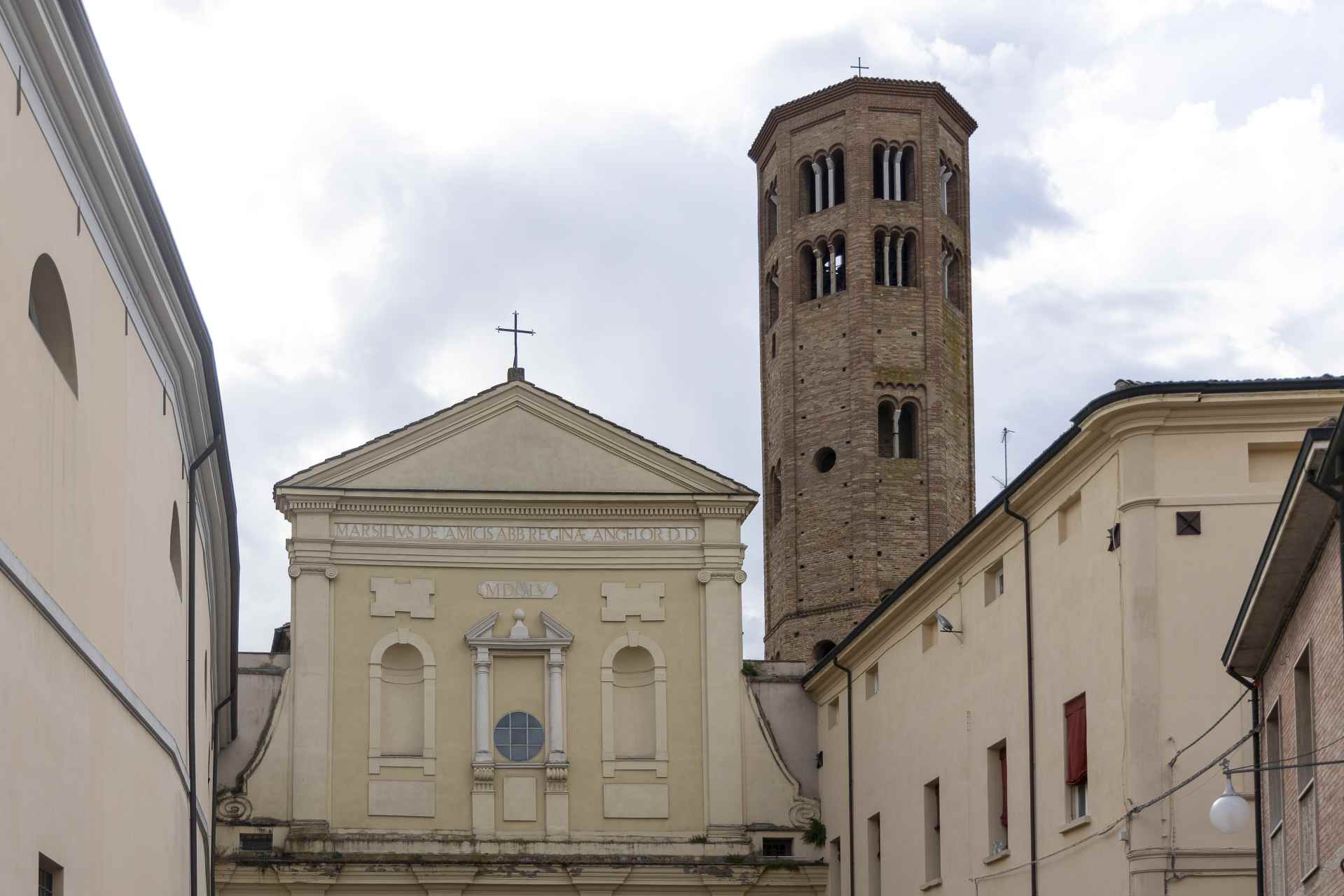
Also known as Santa Maria Vecchia or Santa Maria Foris Portam, it was one of the first churches of Faenza.
An ancient home of a Benedictine community, in 1072 it hosted Saint Pier Damiani, one of the patrons of Faenza and an important theologian of the medieval church, to whom a chapel is now dedicated.
The first mentions of the monastery and the church of Santa Maria date back to the Early Middle Ages, and some wall structures from that period still remain. It is believed that the original church had a basilica plan with a single nave, oriented to the east.
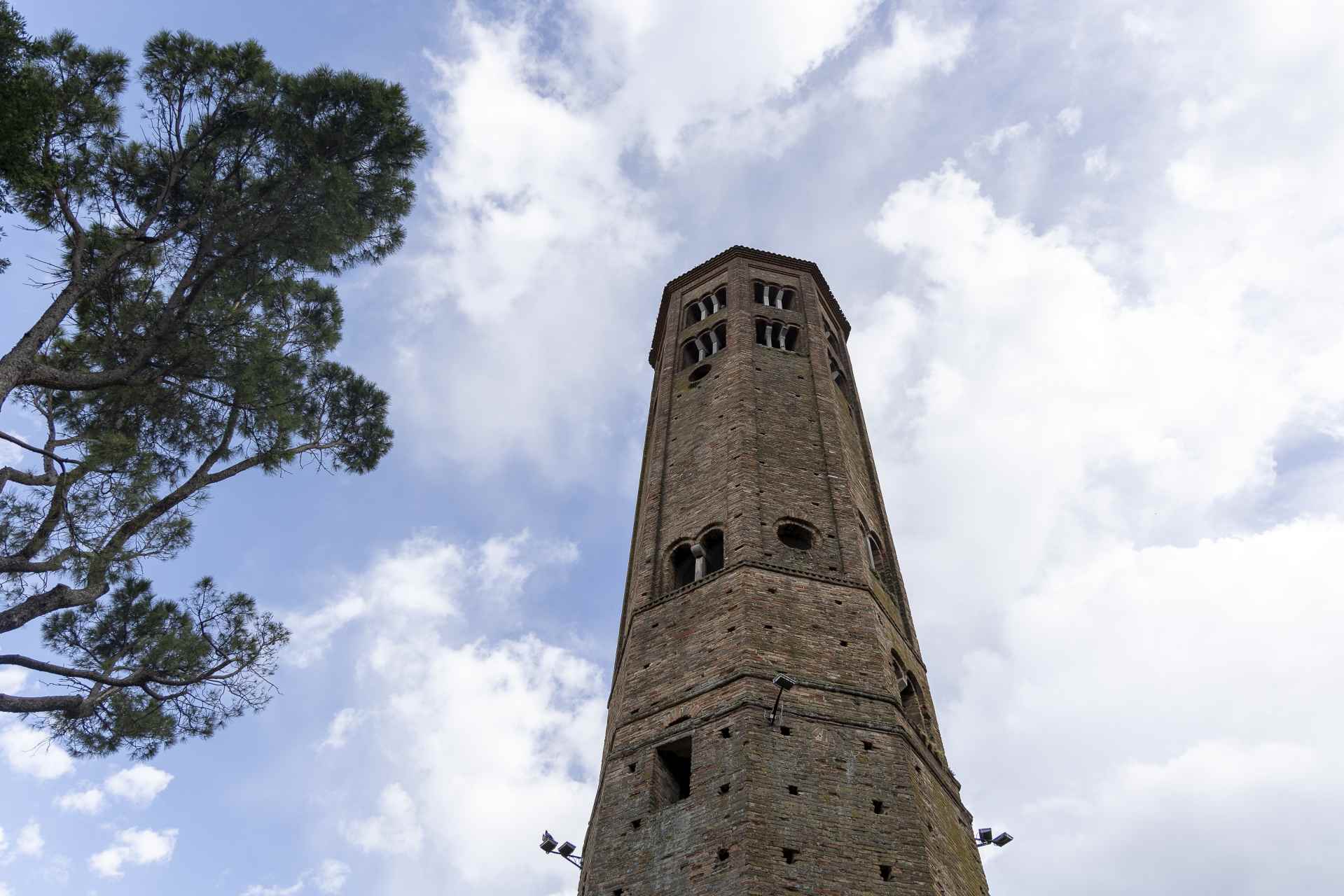
The medieval phase is represented by the tall octagonal bell tower, whose upper part was destroyed by bombings in 1944 and later rebuilt in its original form.


The church underwent several modifications over the centuries and today presents the 17th-century version by Bartolomeo Sauli, who reversed its original orientation and enlarged the interior spaces.
Not to be missed are the 1523 altarpiece Madonna with Child, Saint Joseph, Saints and the Bonaccorsi Donors by the painter from Imola, Gaspare Sacchi, and the late 16th-century altarpiece Episodes from the Life of Saint Bernard, depicting the saint’s life, attributed to Niccolò Paganelli and Marco Antonio Rocchetti.
The bell tower
Dating back to the IX century, the bell tower was erected by using the remains of even more ancient material, including that from Roman times. The structural planning of this bell tower is unique in its kind while, at the same time, it has similarities with those from the Ravenna area, especially with regards to the base with spurs that join up the four corners to the external octagonal structure which holds the staircase that winds around the internal cylindrical flue. Beneath the XII century belfry a second belfry with central columns and small covering arches was built (a kind of “elevated crypt”), devoted to San Pier Damiano, who died in the monastery guest-rooms near to the bell tower base on February 22nd 1072. The top was damaged by cannon shots in 1944; the section was rebuilt after the war, returning it to its original appearance which, in the year ‘400, had been modified by placing a spire on its roof.