With the takeover of the city by the Manfredi family, Faenza underwent a phase of expansion and renewal. The large-scale urban fortification began in 1376-1377, aimed at enclosing all the suburbs that had developed.
After a period of suspension, construction of the walls resumed in 1449 under the initiative of Astorgio II.
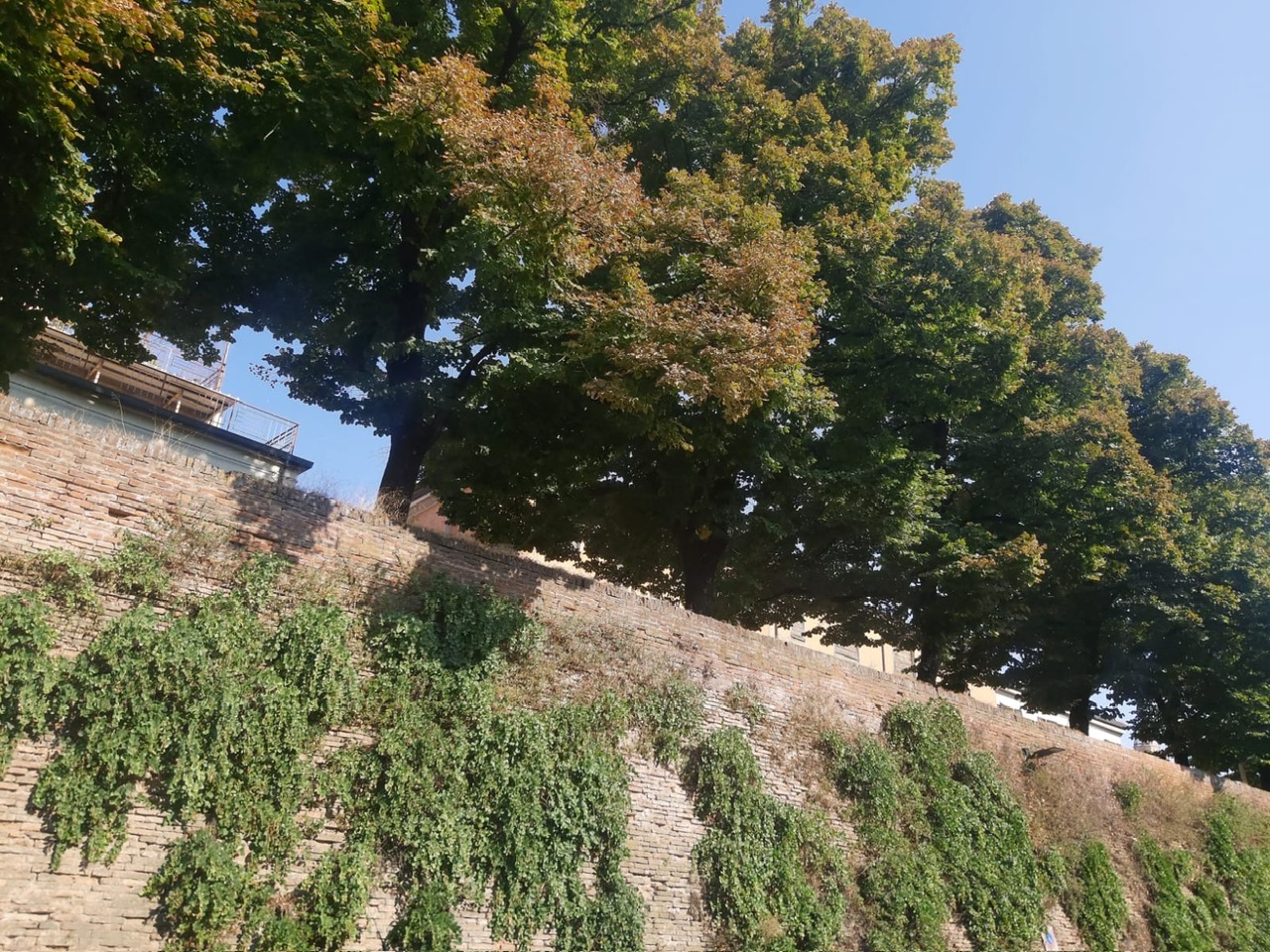
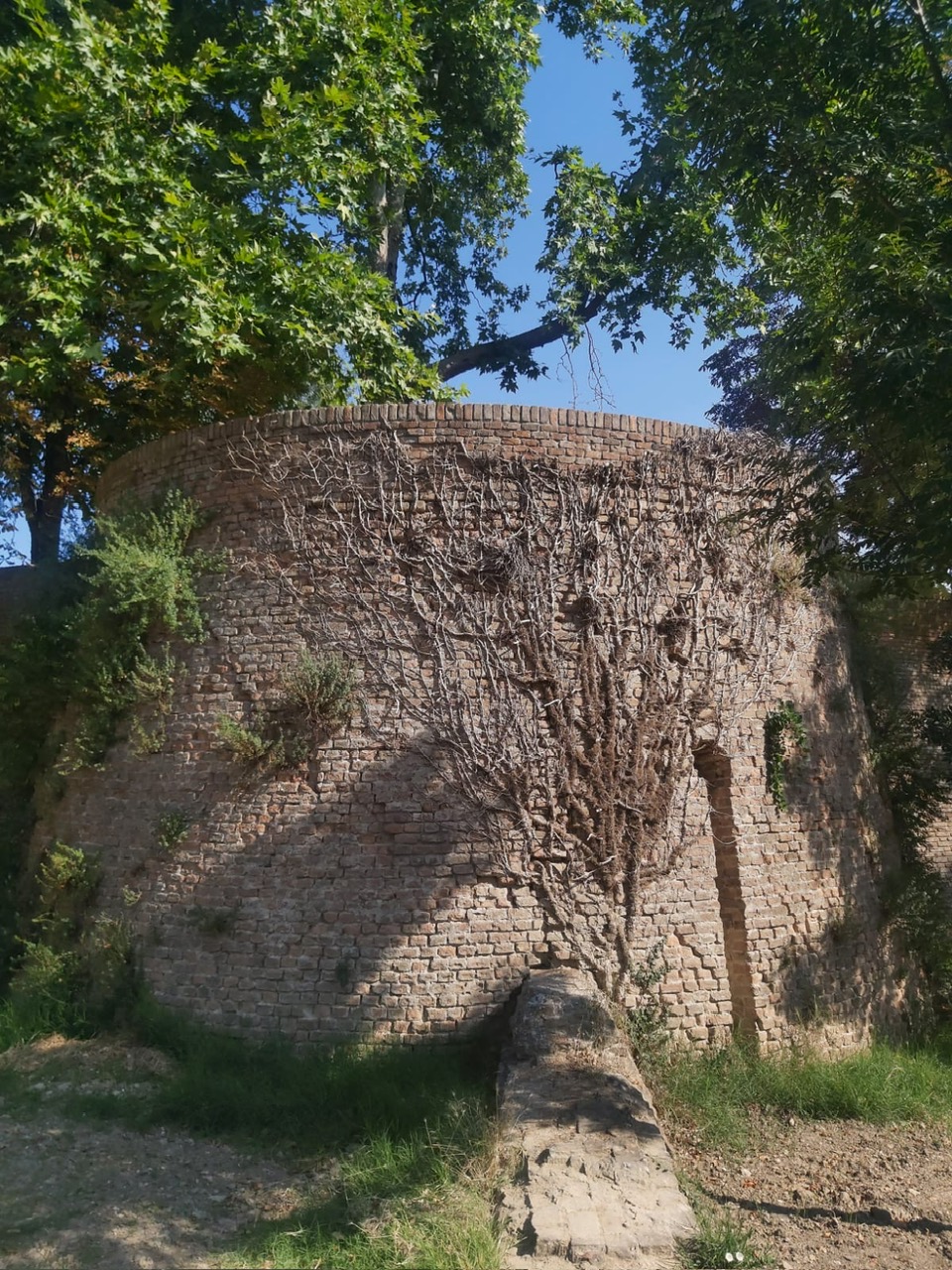
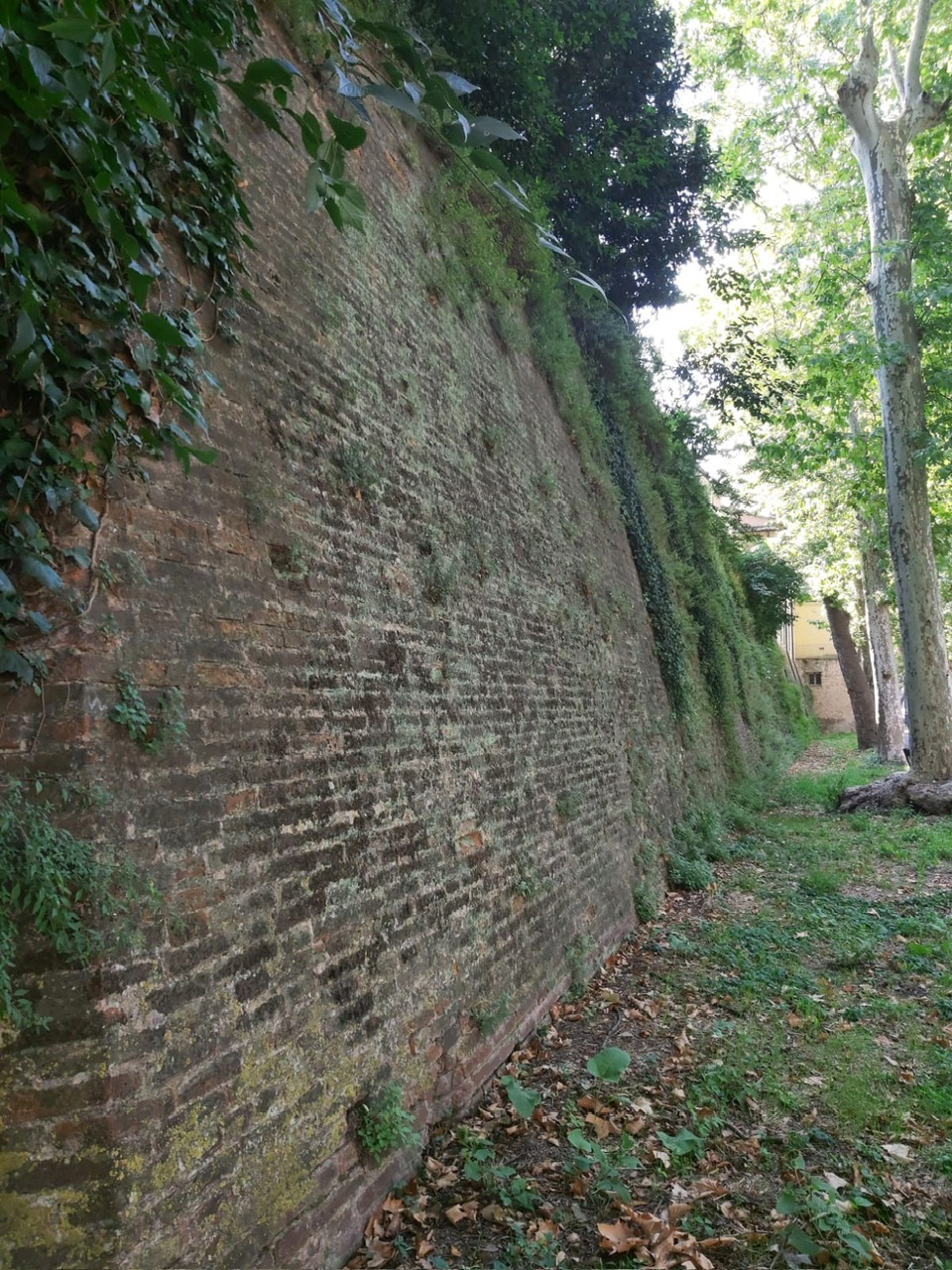
The Manfredian walls stretched for about 5 km and consisted of a brick enclosure with Ghibelline battlements, reinforced with buttresses to withstand the power of firearms. The walls connected small watchtowers, circular towers for defense, large towers for mounting bombards, and arched gates for the passage of people and goods.


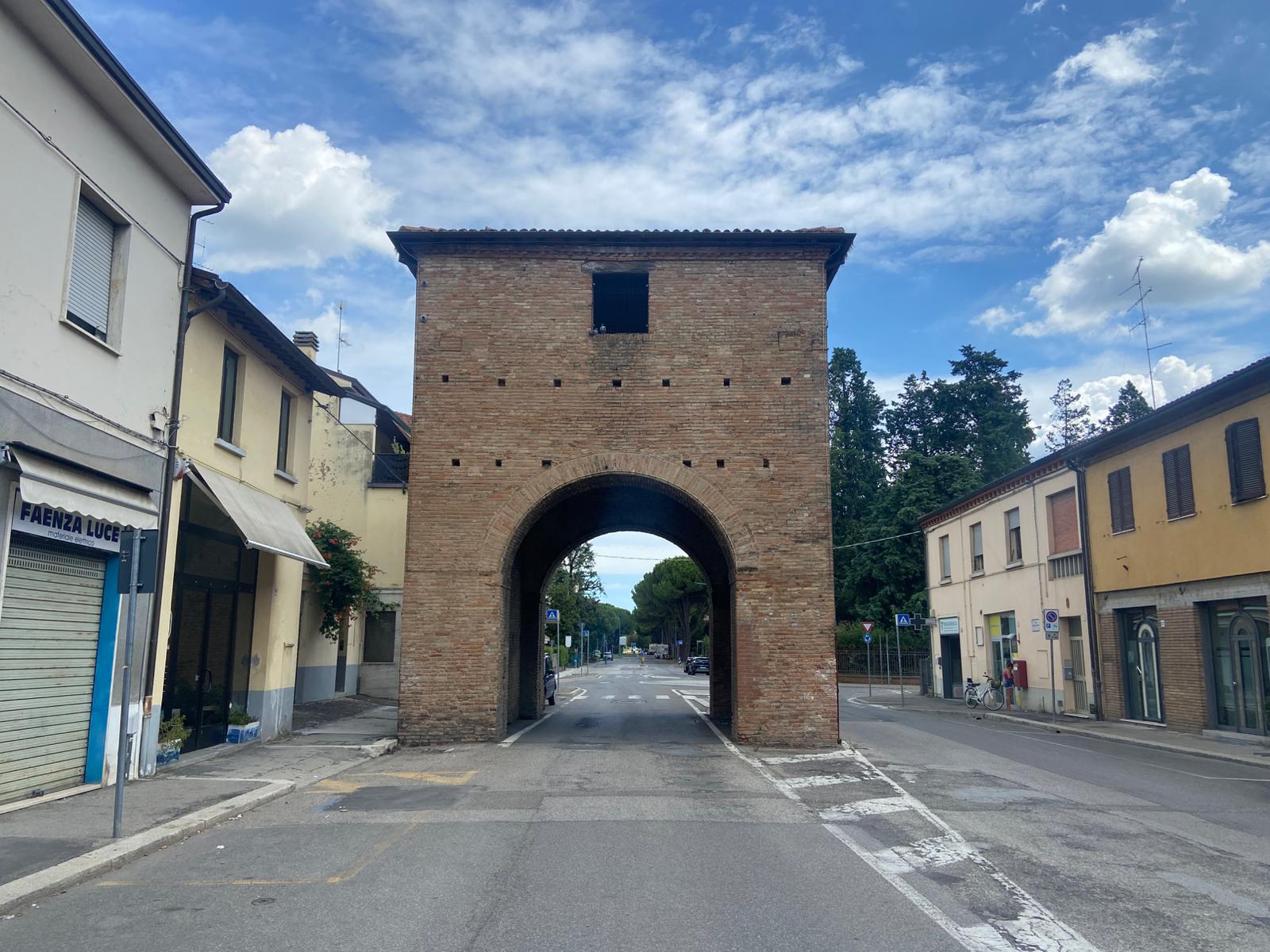
Porta delle Chiavi
Of the nine original gates, only the Porta dell'Ospitale remains, a name linked to the pilgrim hospice near the chiesa della Commenda in Borgo Durbecco, known as the Porta delle Chiavi since the 18th century.
The current appearance of the gate dates back to 18th-century restorations after a fire, and 19th-century interventions, including the addition of new windows, removal of battlements, and adjacent buildings. Above the access arch is a terracotta panel depicting the Blessed Virgin of Grace.

Sections of the walls are visible along via Angelo Lapi, via Ponte Romano, via Mura Torelli, via Salita, and via Mura Proietti.