The San Cristoforo Springs, also known as the Olmatello Springs, are located just a few kilometers from Faenza, in a peaceful green area called Olmatello, along the Lamone valley, heading towards Brisighella.
Their name comes from a small chapel dedicated to San Cristoforo, which once stood in this area. Legend has it that the spring was discovered by a shepherd whose sick sheep recovered after drinking its waters.
The San Cristoforo Springs are set in a landscape of great charm, surrounded by wild vegetation and dominated by an imposing marl cliff that rises directly above the spring. Nearby, hiking trails connect other mineral springs in the area, such as the Puriva Spring, the Rio delle Zolfatare Spring, and the Vedreto pools, ideal for short nature walks.
It is certain that the San Cristoforo mineral waters were known and used as early as the 16th century: they were mentioned by the professor of medicine Mengo Bianchelli and the renowned anatomist and surgeon Gabriele Falloppio.
The Manfredi family, then Lords of Faenza, had a well dug to collect the miraculous waters.
In 1650, due to some landslides, the springs were almost lost, and by 1740 they appeared as a swamp. However, in 1747, the protomedic of Faenza, Giambattista Borsieri, conducted a careful study of the waters, culminating in the 1761 publication of the treatise “Delle acque di S. Cristoforo”. Borsieri identified different types of waters with varying salt concentrations, particularly beneficial for the liver and possessing purgative and refreshing properties. The spring with the best qualities was named “Olmatello”, and thanks to his work, the springs returned to therapeutic use.
In the 19th century, the San Cristoforo Springs were studied again, including by Paolo Sarti (1812), who confirmed their excellent qualities, comparable to those of the Tettuccio di Montecatini. Nevertheless, the area did not develop as a tourist destination due to difficult access and lack of proper water collection works. Frequent landslides and mudslides worsened the situation: in 1905 the wells were buried under five meters of earth.
In the 1920s, Luigi Ranieri obtained a sub-concession from the Municipality for the exploitation of the waters, committing to fund the works in exchange for a symbolic fee. His management, later continued by his heirs, met with moderate success until the 1970s, when the facility was closed due to lack of funds.
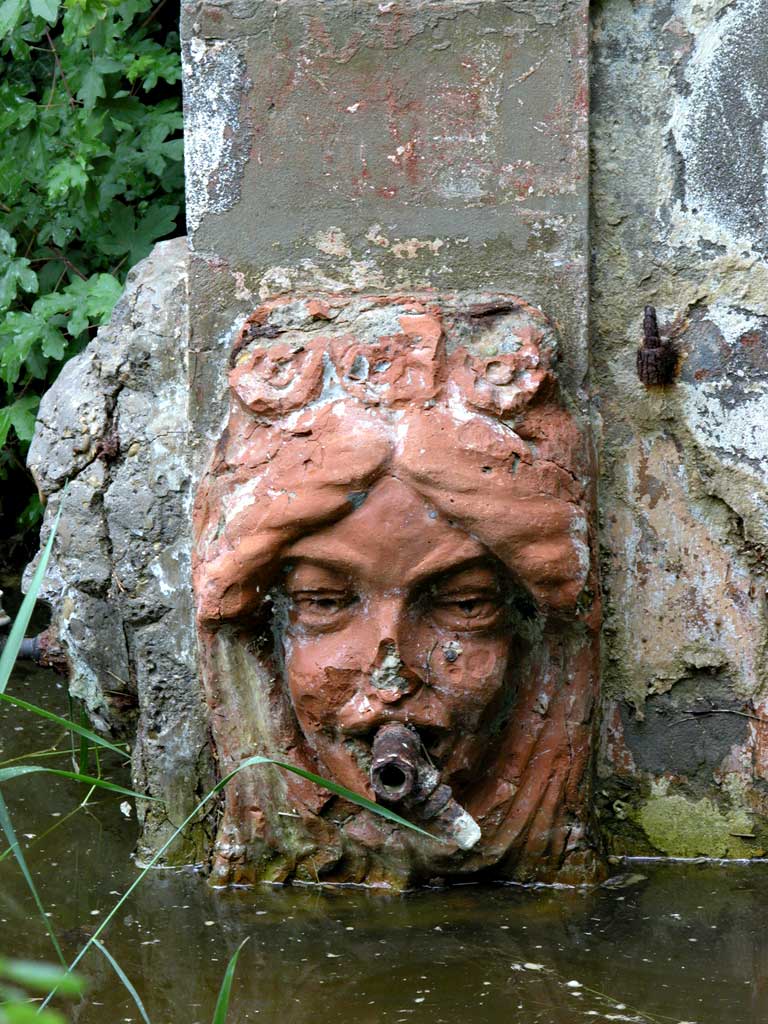
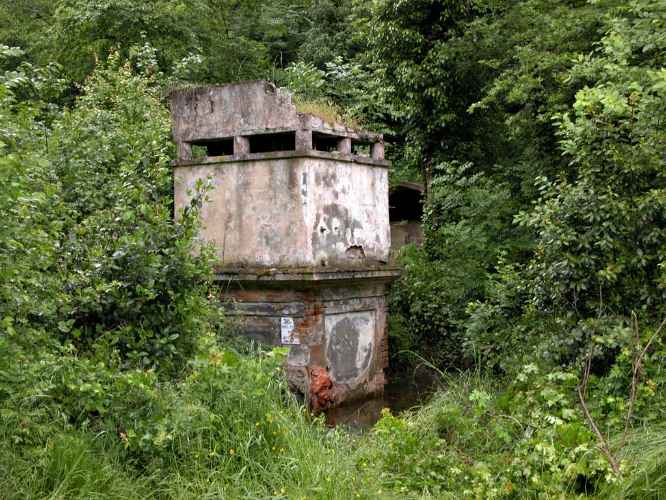
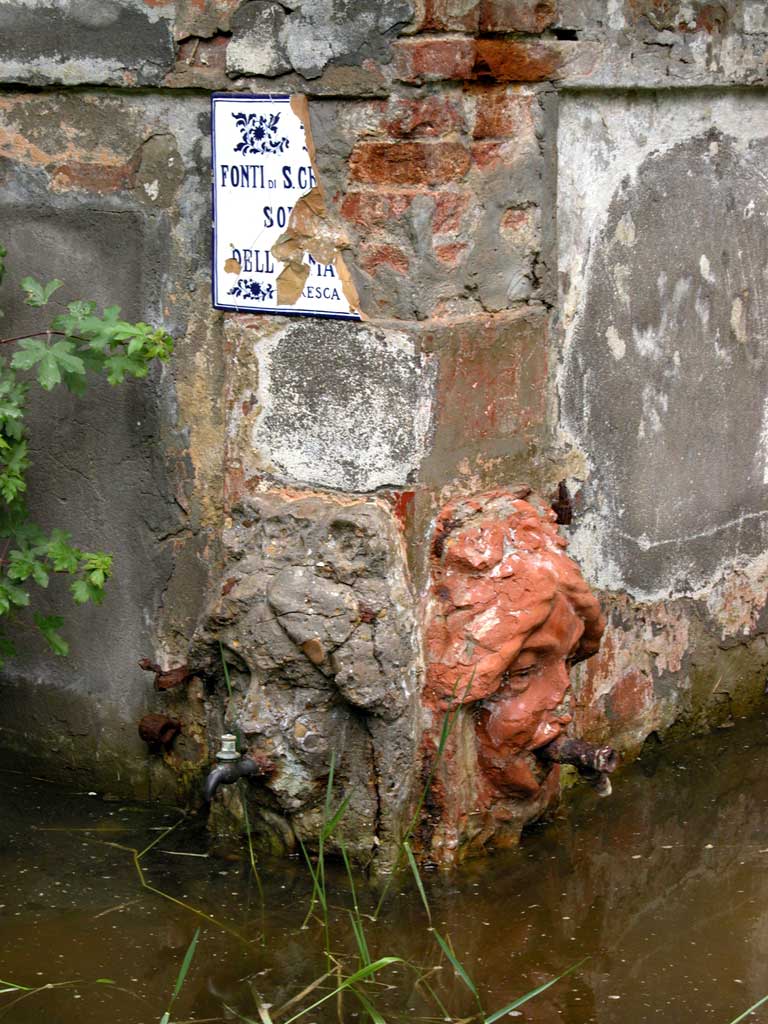
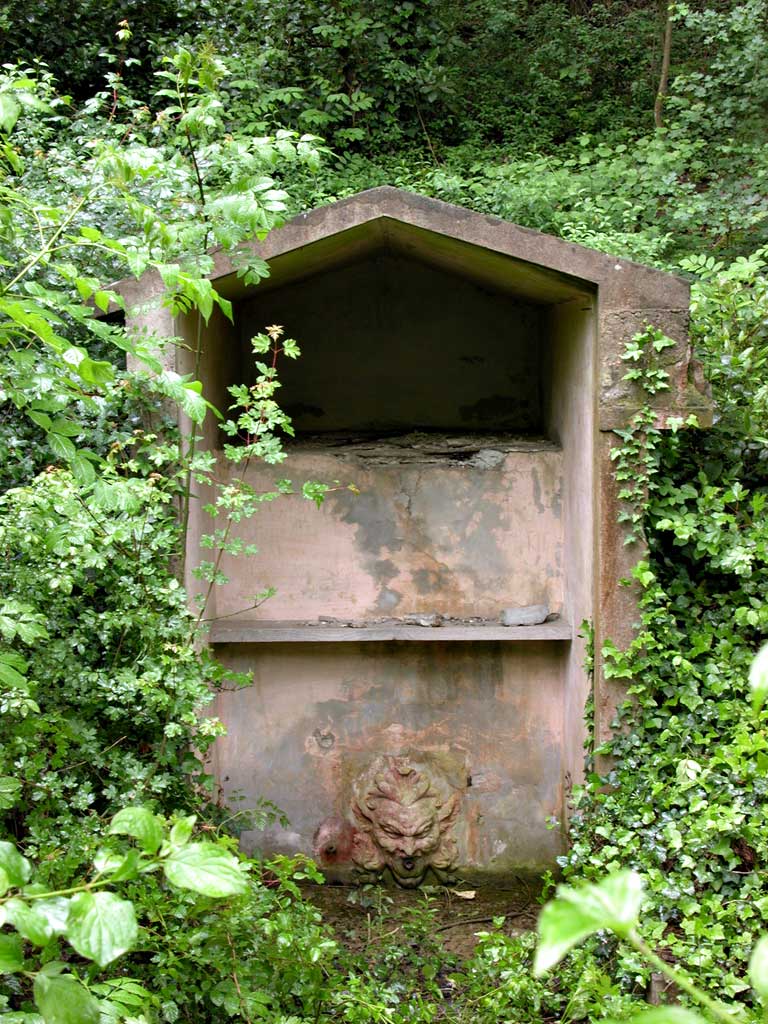
The charming bar-restaurant building, built by Ranieri in 1924, is now slowly deteriorating. Under the loggia, the effigies of San Cristoforo, Borsieri, and Testi can still be admired, while in the surrounding area remain two collection cisterns with terracotta masks and a damaged ceramic tile bearing the inscription: “Fonti di S. Cristoforo / sorgente / dell'Olmatello / fresca.”
Today, the springs, partially submerged by clay carried by the Rio Quartolo, can be easily reached from Faenza by following the road to Brisighella, towards Olmatello.