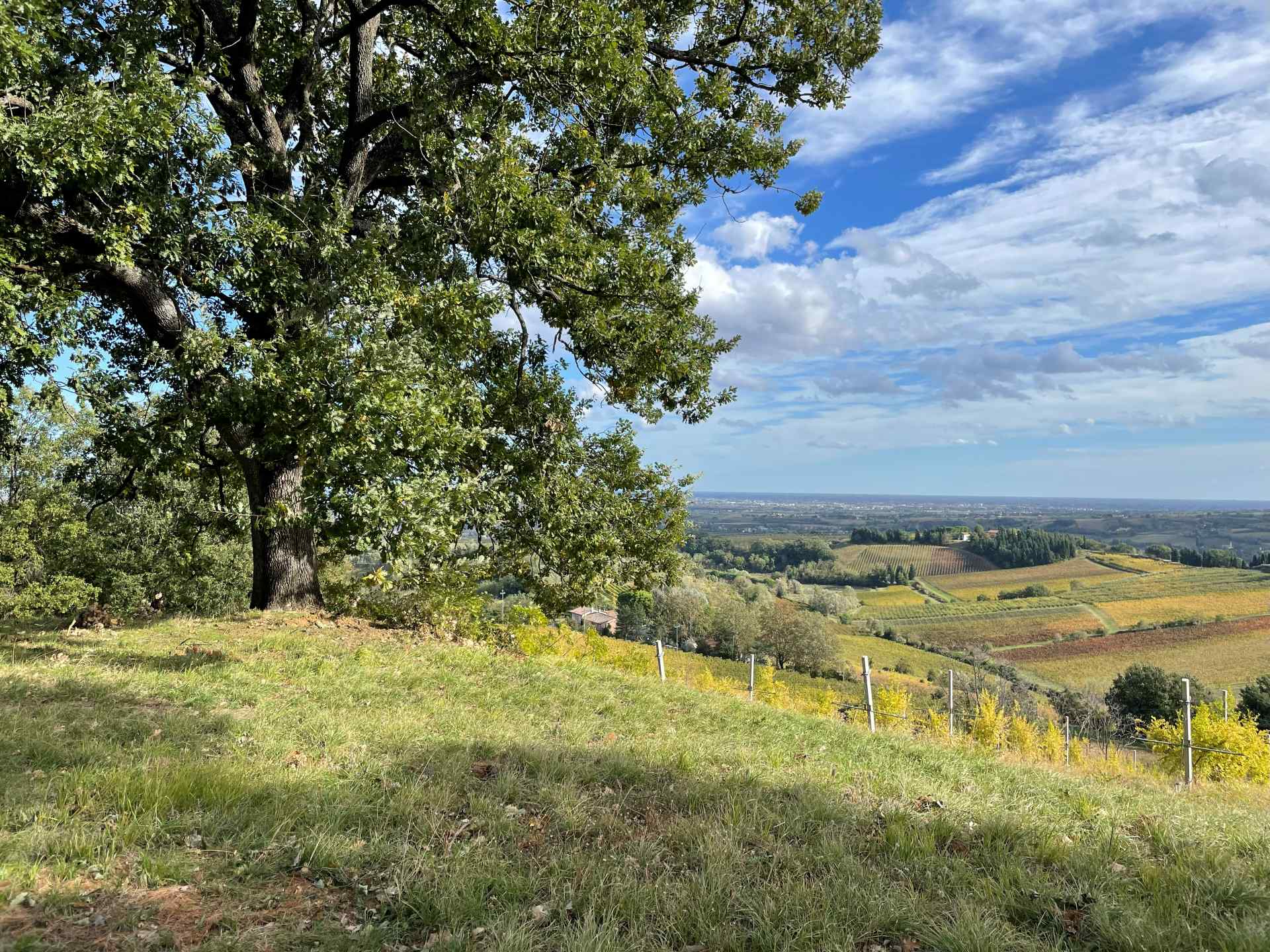
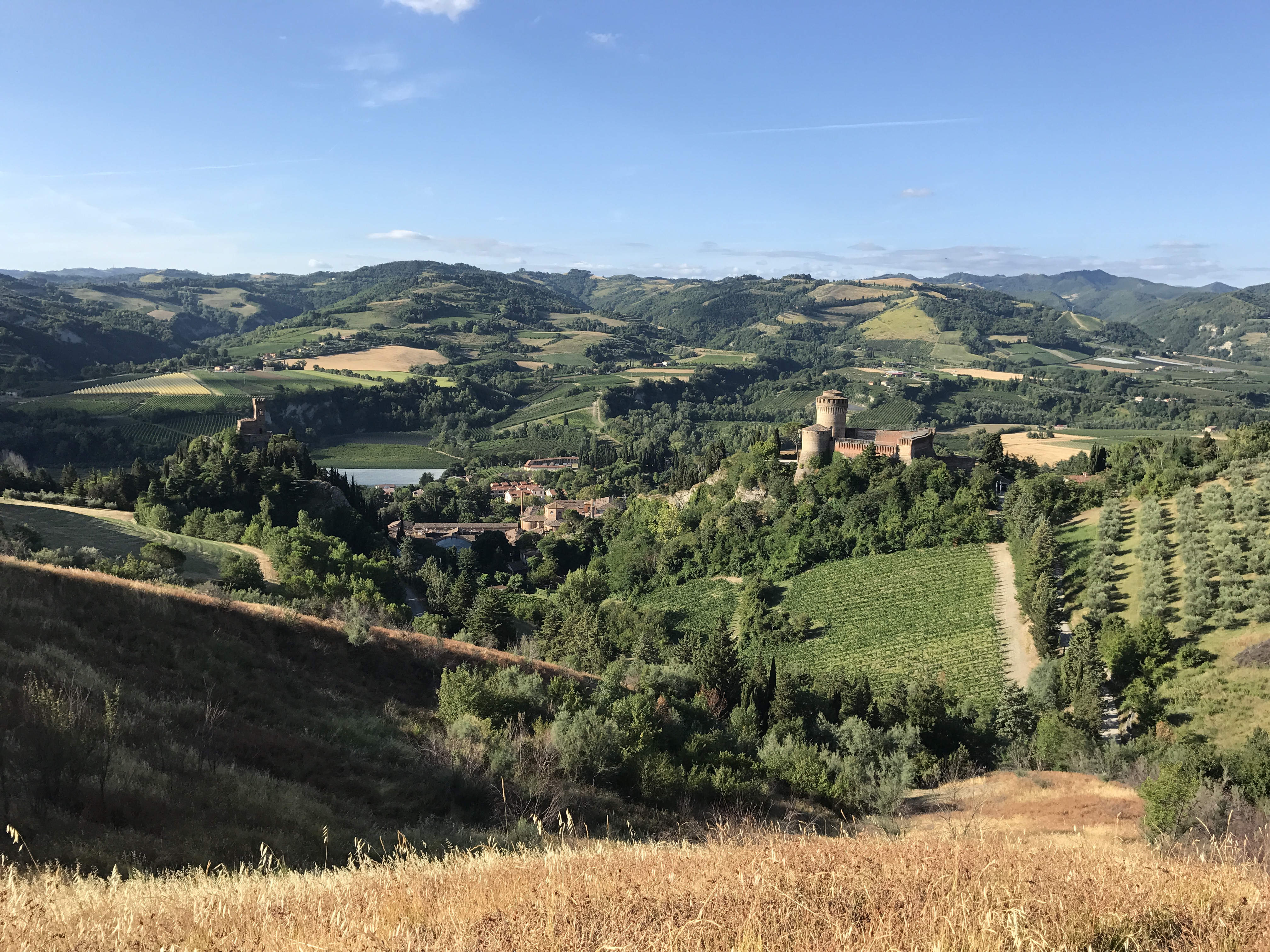
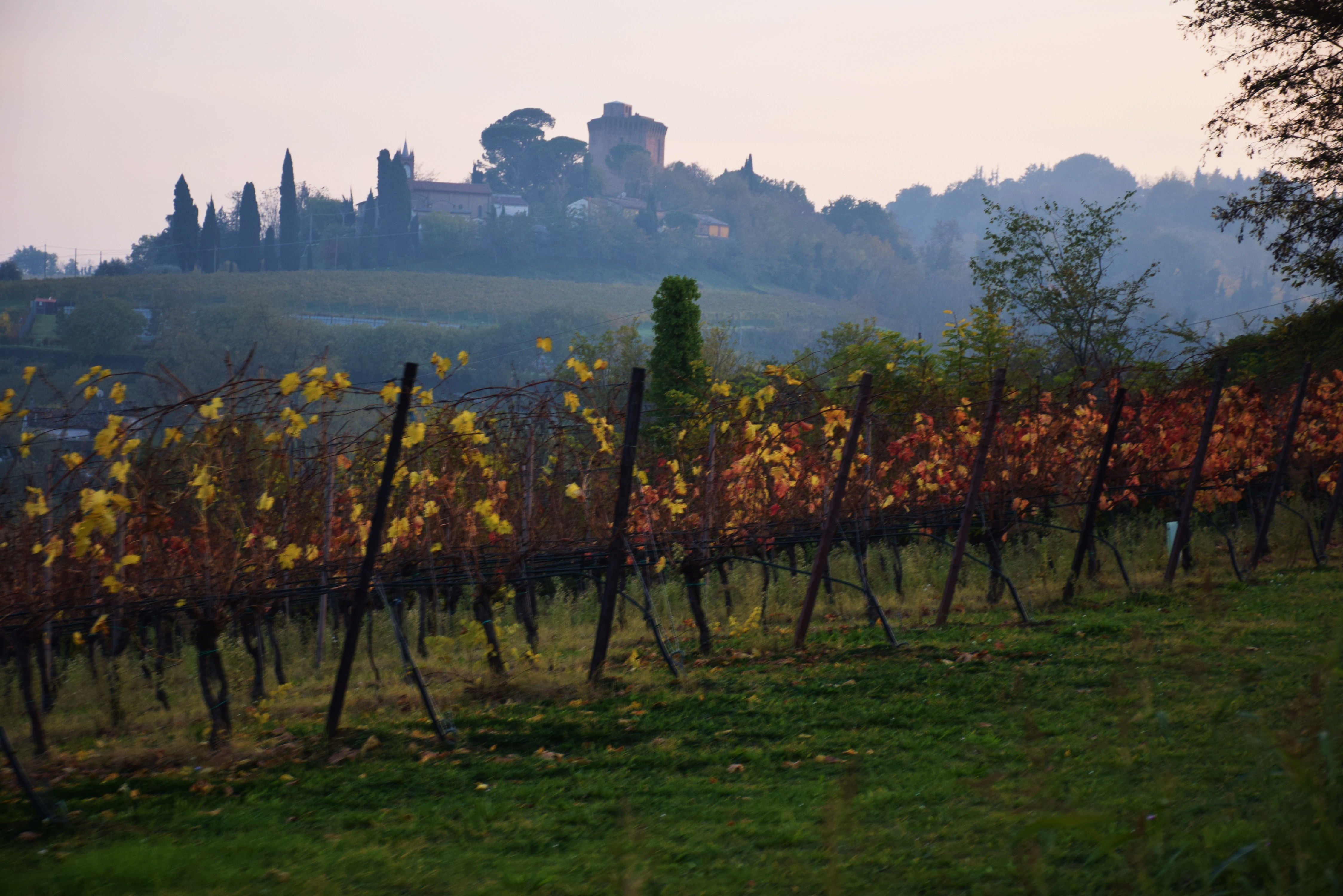
The Faenza territories host four of the sixteen Subzones of the Sangiovese Romagna DOC designation: Serra, Brisighella, Marzeno, and Oriolo – unique terroirs with characteristic microclimates and distinctive soils, producing high-quality wines that express different nuances.
Sangiovese is the flagship wine of our land and, with its straightforward, lively, and slightly rough first impression, reflects the Romagnolo temperament: rustic, generous, and full of personality.
Serra Subzone
The first, to the north, has fertile clay-iron soils producing fresh and lively reds. The second, further south, is the heart of the district, with altitudes between 100 and 250 m and clay-limestone soils, offering wines with vibrant fruit, warmth, balance, and incisive tannins.
The third, along the Senio River, is characterized by gullies that limit viticulture to a few areas. The fourth sector, part of the Vena del Gesso Romagnola Regional Park, is a unique landscape where viticulture represents only a small portion.

Marzeno Subzone
The vineyards dominate the two hill ridges parallel to the stream, on clay-limestone soils at altitudes between 100 and 200 meters. Here, Sangiovese wines are warm, tannic, and austere, but develop great complexity and dynamism over time.
The foothill area of Sarna is the only exception, characterized by more evident plains and fertile evolved clay soils. Here, red wines stand out for their volume and intense fruitiness, ideal to enjoy young.
Brisighella Subzone
In the first area, soils range from clay-iron to calcareous, giving Sangiovese intensity, vigor, and warmth. The second, around Brisighella, has marl-sand soils with altitudes up to 400 m. Wines here show less tannic strength and greater finesse in detail.
The third area, near the Apennine foothills, develops along marl-sand terraces. Wines show nervous and mineral fruit, marked tannins, and a sapidity that balances the alcohol. The Brisighella Subzone is also suitable for white wines (Trebbiano at least 60%; Albana and Chardonnay up to a maximum of 40%).

Oriolo Subzone
Two exceptions stand out. The first concerns the Petrignone hills, with darker soils giving Sangiovese more pronounced sapidity and tannins. The second is the Messinian Molasse, where Sangiovese acquires mineral notes in the aromas and a broad, full-bodied taste.
The Oriolo Subzone also allows the production of white wine (Trebbiano min. 70%, Albana max. 30% alone or blended with other suitable white grapes up to 5%) and Centesimino, in the reserve, passito, and sparkling rosé variants.