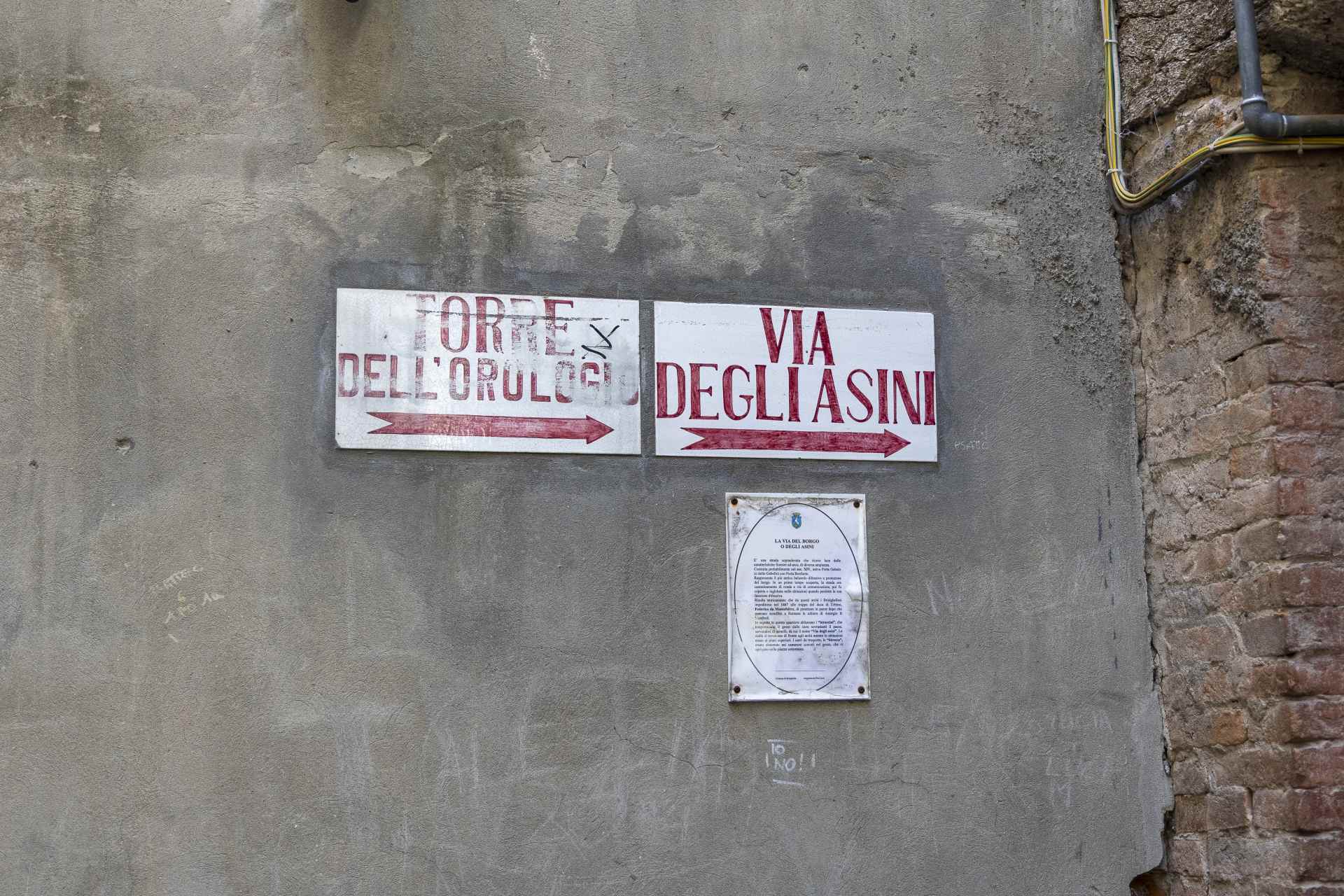
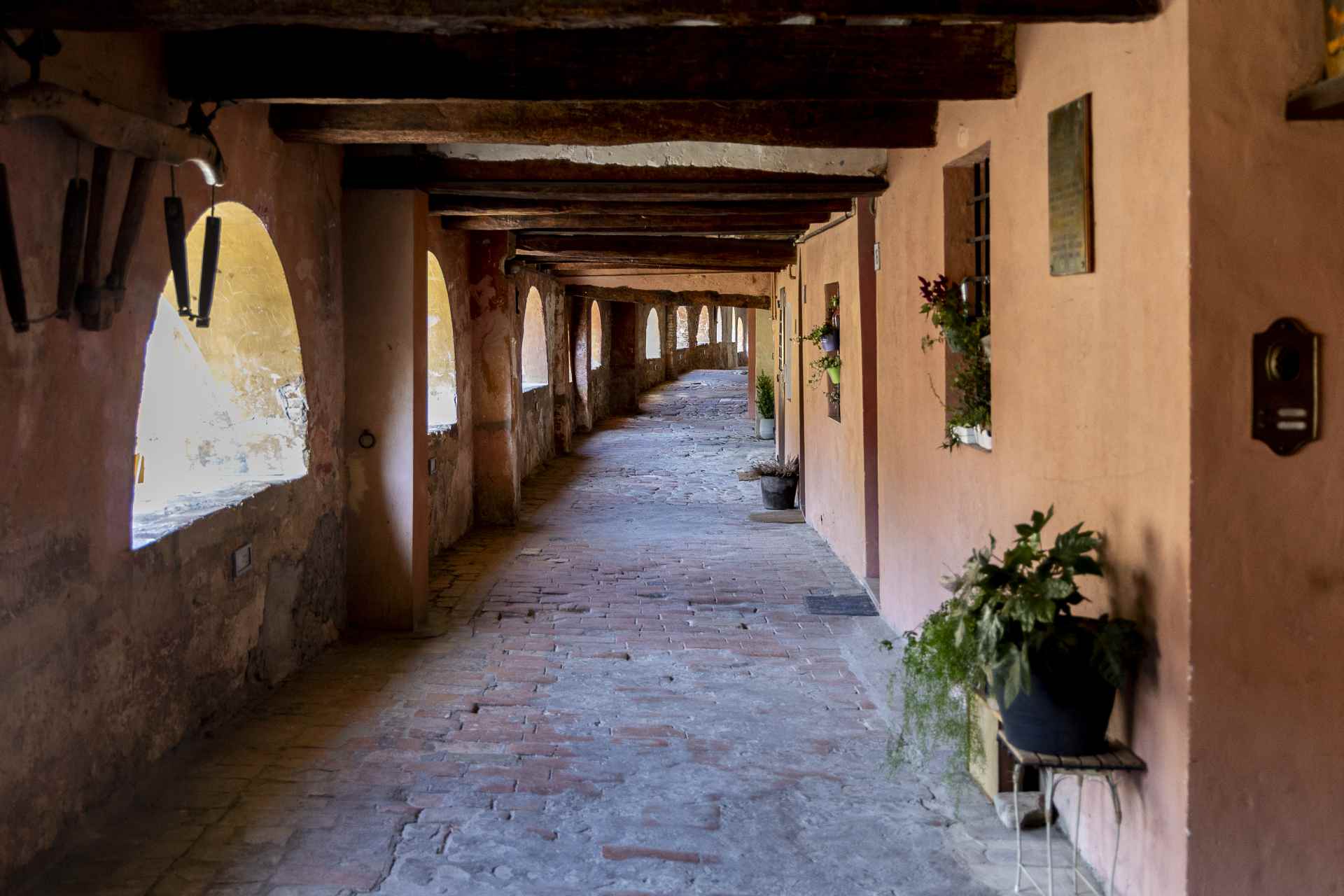
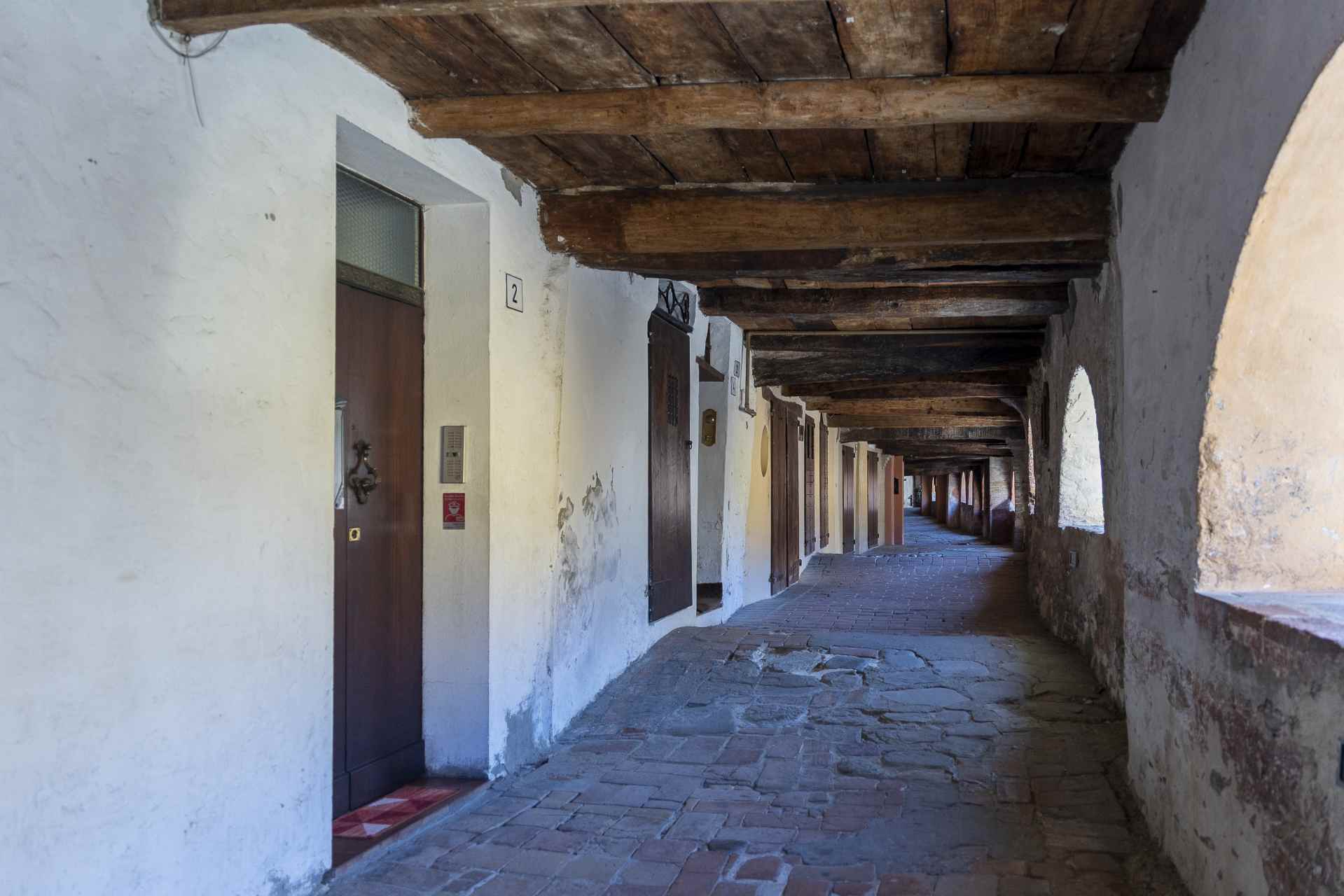
Known as Via del Borgo or Via degli Asini, this medieval street is set within a row of buildings leaning against the gypsum cliff, elevated above the main square of the village, overlooking it.
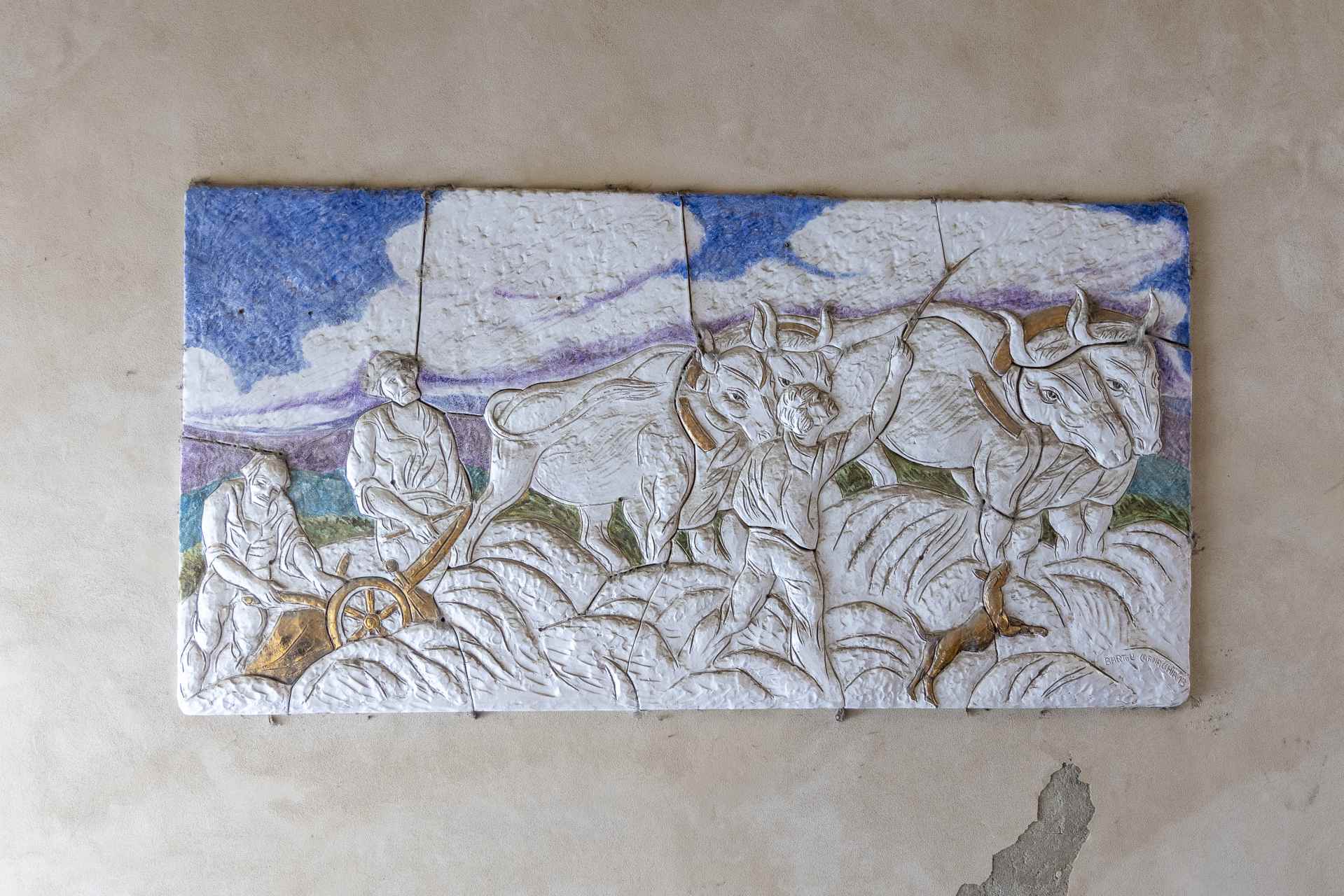
This covered street was originally built for military purposes, to defend the village, but soon became a transport route for the birocciai, the cart drivers who carried materials from the local gypsum quarries and also sheltered their animals here, typically donkeys, which gave the street its name.
It is here that the famous whip cracklers, the s’ciucarèn in dialect, were born. Today they accompany local marching bands, such as the Banda del Passatore, but in the past they used the tool to urge the donkeys, guide them, and even communicate over distances with coded cracks.
The street preserves exposed wooden beams and is illuminated by a series of arches of different widths, immediately visible from the outside. The intrados of the arches are decorated with delicate golden triangles, painted by the artist Hidetoshi Nagasawa in 2000, which highlight the spots touched by the morning light.
From the entrance at Porta delle Dame, it is possible to visit Casa Boschi-Raggi, carved into the gypsum and originally used as an icehouse. From here begins an uphill path leading to the Torre dell'Orologio, continuing to the Monticino Sanctuary and the gypsum spurs that dominate the village from above.