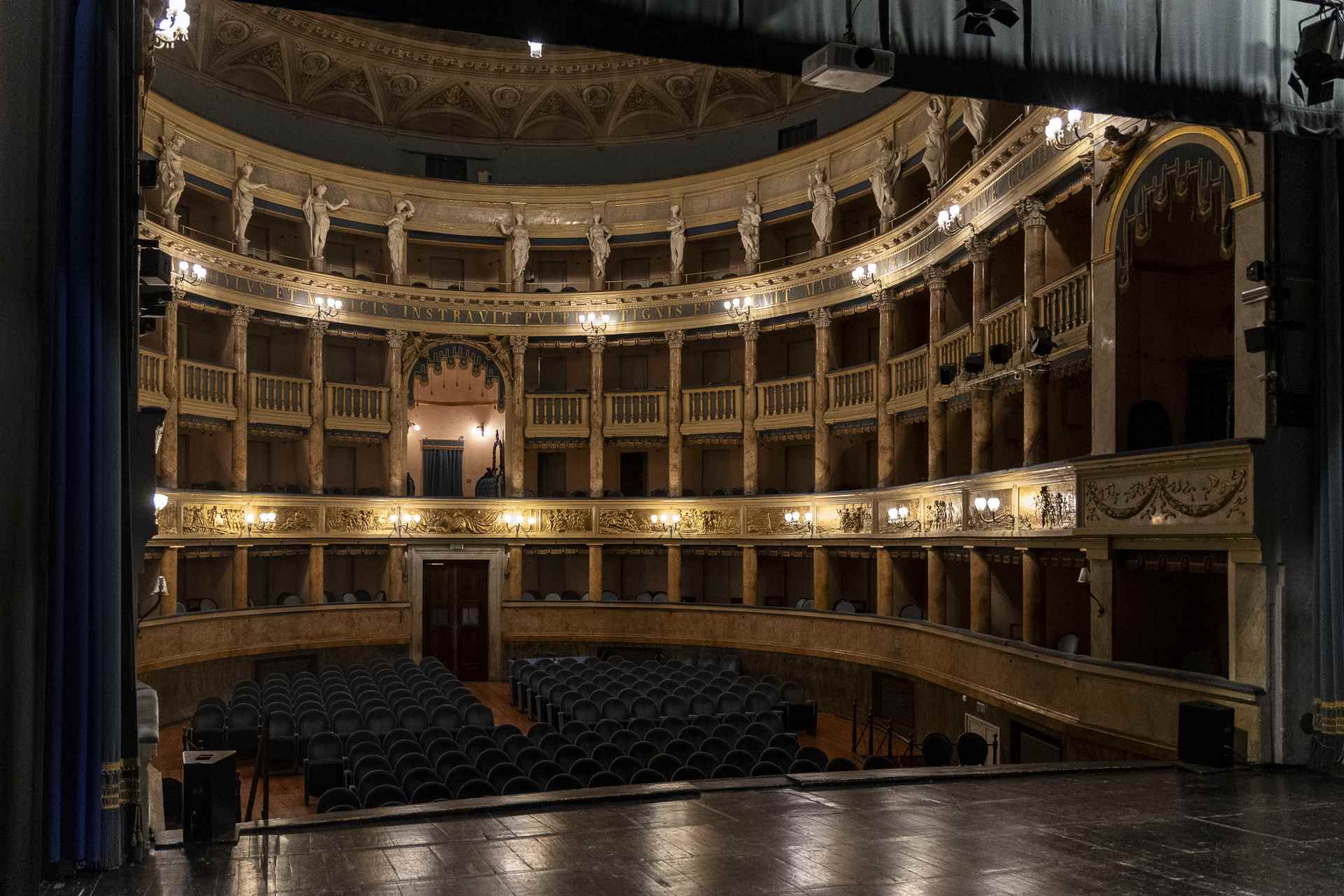
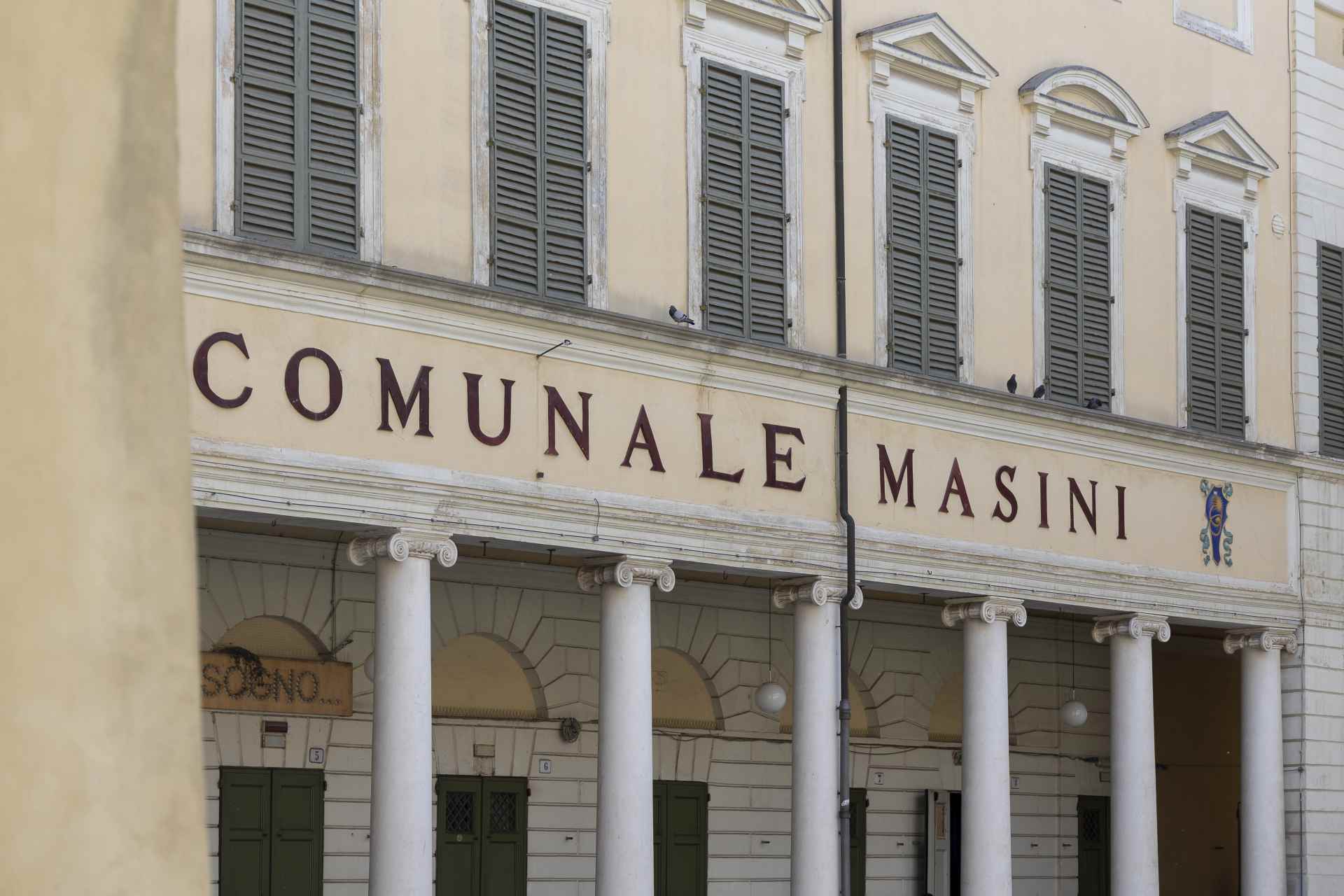
Founded in 1788, it was built to replace the previous theatre of the Accademia dei Remoti, which was housed in the Palazzo del Podestà. The theatre was constructed between 1780 and 1787, based on a design by the architect Giuseppe Pistocchi, the leading figure of Faenza’s neoclassicism. The building features a portico on the façade, which gives access to the foyer, where the "Teatrino per marionette di Casa Gessi" is preserved, a mid-19th-century work by the set designer Romolo Liverani.
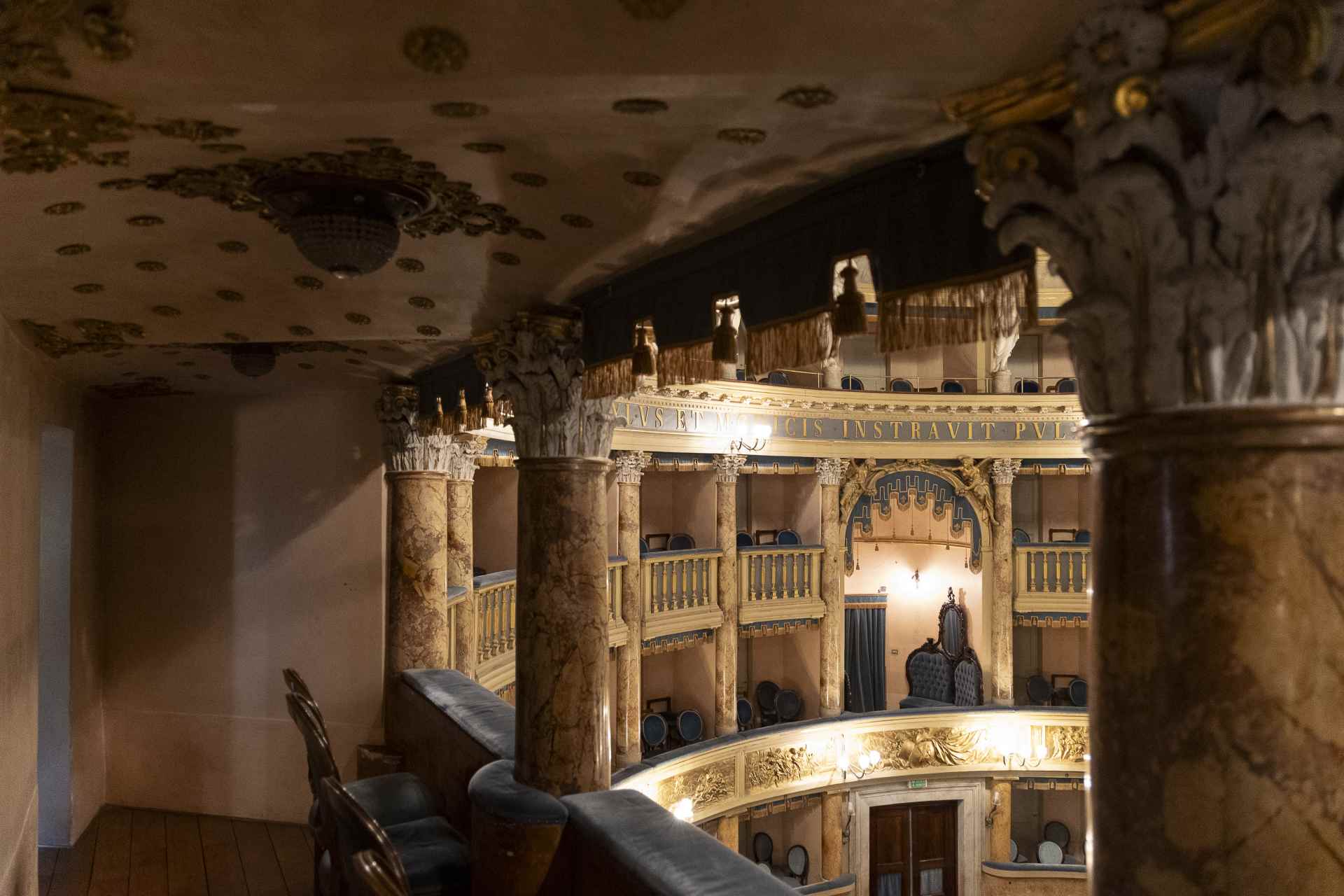
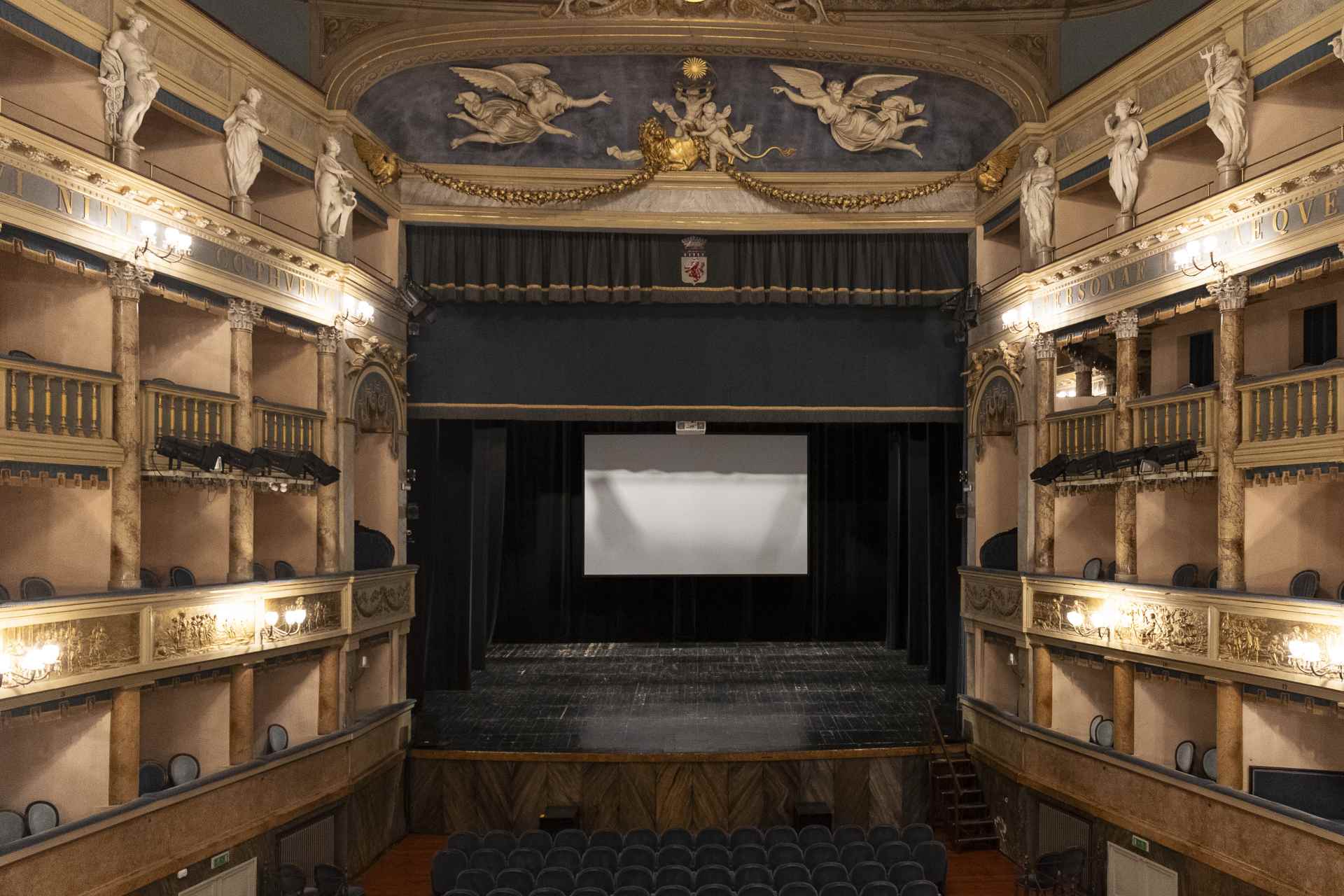
The interior is organised according to the characteristic horseshoe layout, elaborated with originality in the design of the balconies, each decorated with different motifs by the sculptor Antonio Trentanove, enhancing and animating the auditorium walls. Of particular interest is the parapet of the second tier, made up of a sequence of low-relief terracotta metopes with mythological and Roman historical subjects, and the fourth tier of boxes, separated by a series of attached statues representing the Olympian gods and the Muses.
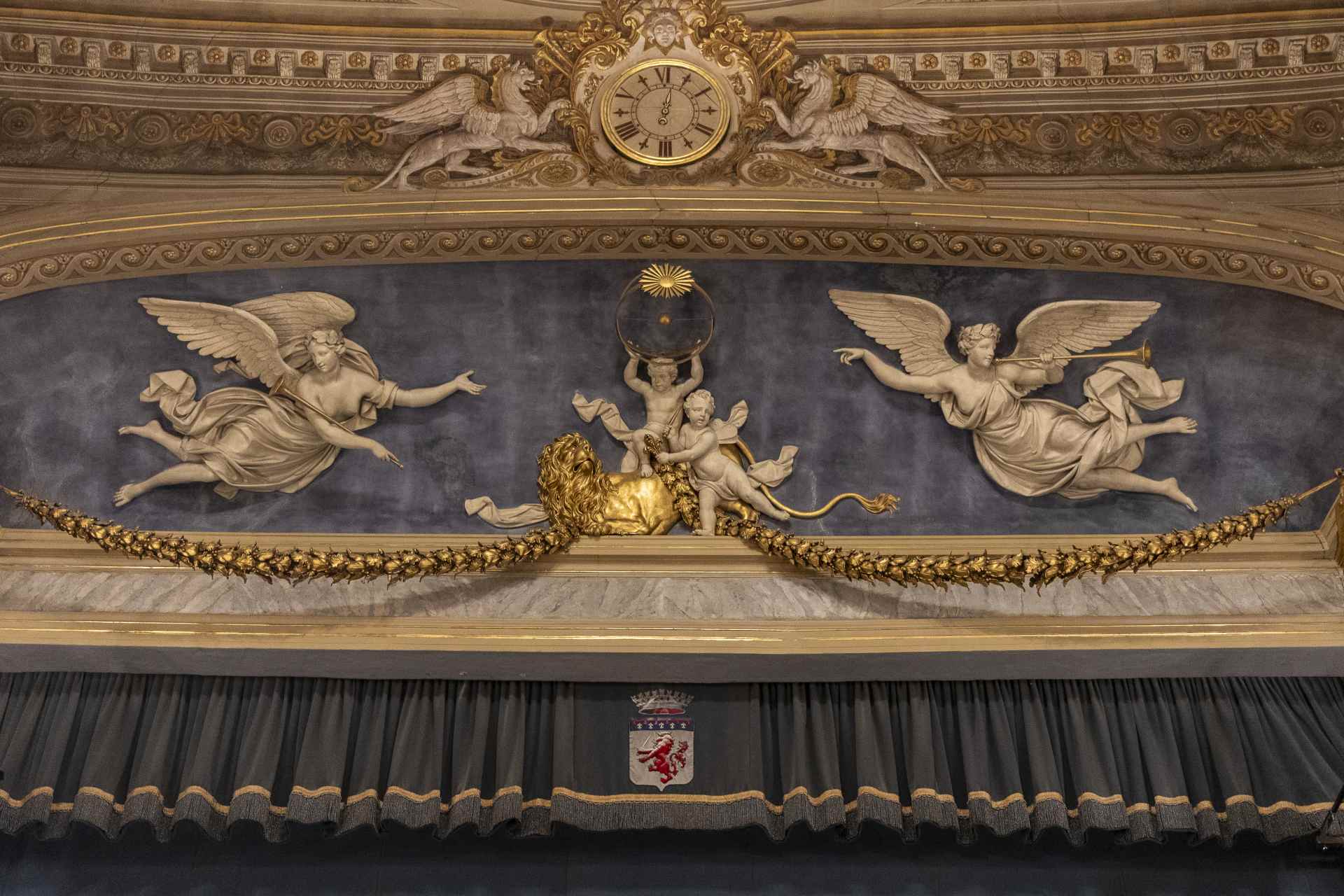
The ceiling features a central rosette surrounded by allegorical figures. The building ends with a large stage equal in size to the auditorium. Pistocchi’s work remains fully functional today, with the original 19th-century stage grids and equipment still in use. The theatre was inaugurated in 1788 with the performance of the opera Caio Ostilio (repeated thirty times) along with two ballets.


Today, the Masini Theatre is a vibrant centre of artistic activity, with a rich programme of performances showcasing prominent names and high-quality productions in Faenza.

An important cultural venue, the theatre is also part of the European Route of Historic Theatres.