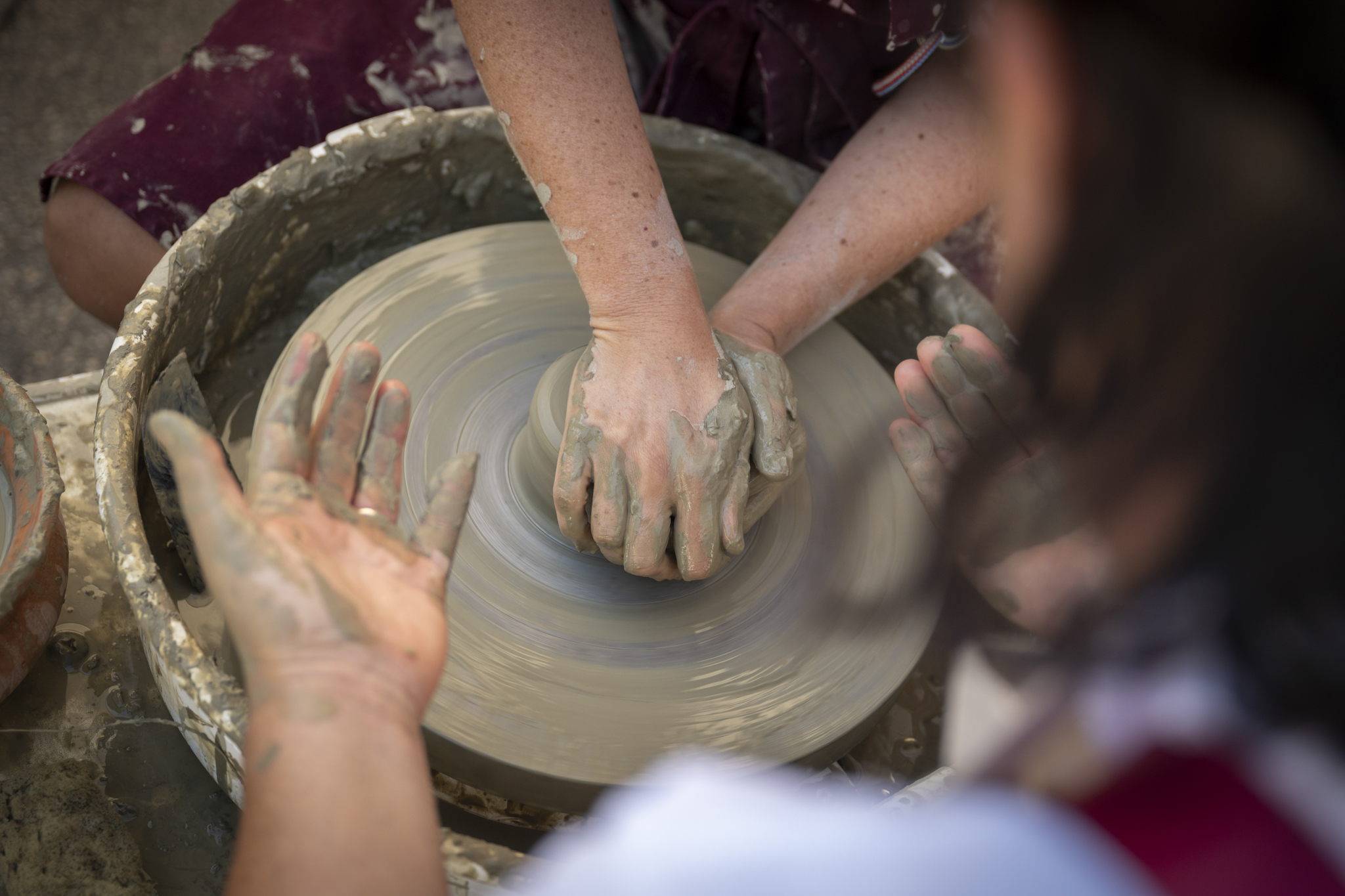
This route was created thanks to the European MED-Routes project, whose aim is to encourage sustainable cultural tourism through the creation of short itineraries within the main European Cultural Routes. The city of Faenza is the lead partner of the European Route of Ceramics, a certified itinerary of the Council of Europe, and within the Around Faenza area a network of routes has been developed between plains and hills, the result of a participatory process involving collaboration with local operators.
Along the way, you can immerse yourself in local traditions through craftspeople, farmers and producers who enhance and preserve the cultural and natural heritage, fostering dialogue to share good sustainability practices. This experience balances folklore, innovation and contemplation, engaging local communities and visitors in a collective process of enhancing the territory.
By connecting to the European Route of Ceramics, the itinerary gains an international dimension: Faenza, a symbolic city of European artistic ceramics, becomes the focal point of a narrative that weaves together art, landscape and memory. The eco-itinerary follows principles of the circular economy thanks to local operators who adopt short supply chains and sustainable methods.

The structure of the itinerary is “daisy-shaped”, comprising a main route and four thematic branches, for an authentic immersion in local landscapes and communities. It uses existing cycle routes and public transport networks to ensure sustainable and modular enjoyment of the area. Along the way you will find facilities and organisations that have made sustainability the hallmark of their work, making traditional Romagna hospitality green and accessible.
1. Main itinerary – From Faenza to Brisighella
A linear or circular route, suitable for a weekend or short break by bike, it represents the central axis of the eco-itinerary. It passes through emblematic places of artistic ceramics, such as the Museo Internazionale delle Ceramiche in Faenza and the workshops of the historic centre, and leads towards hilly landscapes and historic villages such as Brisighella. Agricultural scenery, panoramic routes and encounters with local craftspeople and producers make this section a perfect synthesis of the territory.


2. Variant towards Riolo Terme
From Villa Vezzano the route continues towards Riolo Terme, a historic town with a strong vocation for wellbeing and regeneration thanks to its thermal baths. The route crosses natural areas and allows you to combine cycle tourism and relaxation in a cultural and scenic context of great value.

3. Variant towards Casola Valsenio
A more naturalistic and contemplative route, it winds from Faenza through Via Celle, Zattaglia and the Vena del Gesso to Casola Valsenio. It is the itinerary of medicinal herbs, historic gardens and slow paths, perfect for those seeking a deep connection with nature.

4. Variant towards Castel Bolognese and Solarolo
It develops from Tebano towards the plain, passing by the Steccaia Dam. It allows you to reach Castel Bolognese and the Mulino Scodellino, symbols of rural heritage and grain culture. Ideal for those who want to discover agricultural Romagna and its typical productions. From Tebano the route continues towards Ca’ Rossi and reaches Solarolo. This itinerary enhances agricultural biodiversity, particularly forgotten fruits and local varieties, and tells the story of the daily work of rural communities that keep alive the link between memory and the future.

The itinerary has been designed to offer travellers the opportunity to expand and personalise their experience, starting from the main route and its branches. Thanks to the integration of additional cycle paths, hiking trails and convenient rail and bus connections, you can explore new areas of high cultural and natural interest, especially if you have several days available. These include the village of Oriolo dei Fichi, enriched by its medieval tower, Monte Battaglia with routes dedicated to historical memory, the evocative Grotta del Re Tiberio and the Castello di Rontana, as well as many other environmentally valuable areas within the Parco Regionale della Vena del Gesso Romagnola.